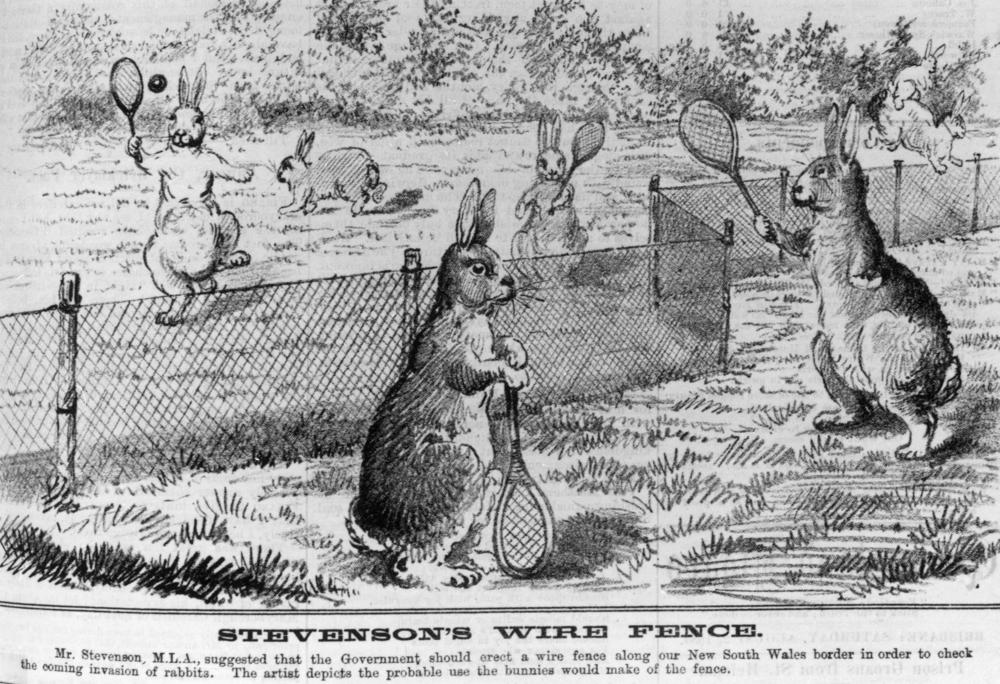
The Rabbit-Proof Fence did not become useless when it lost its first war.
It became available for the next one.
Australia changed the target.
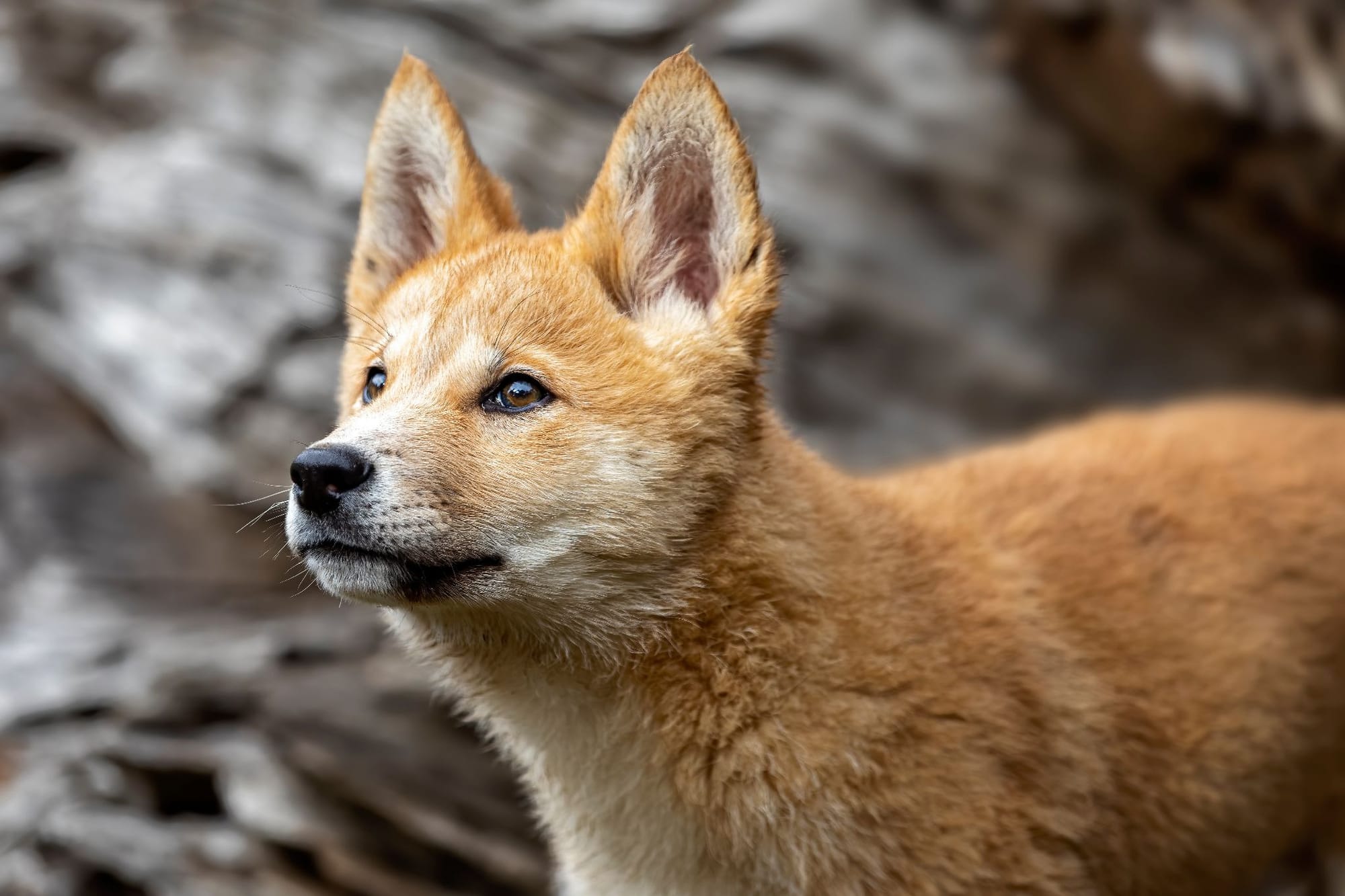
The rabbit had treated the line as a suggestion. The dingo took the line more seriously.
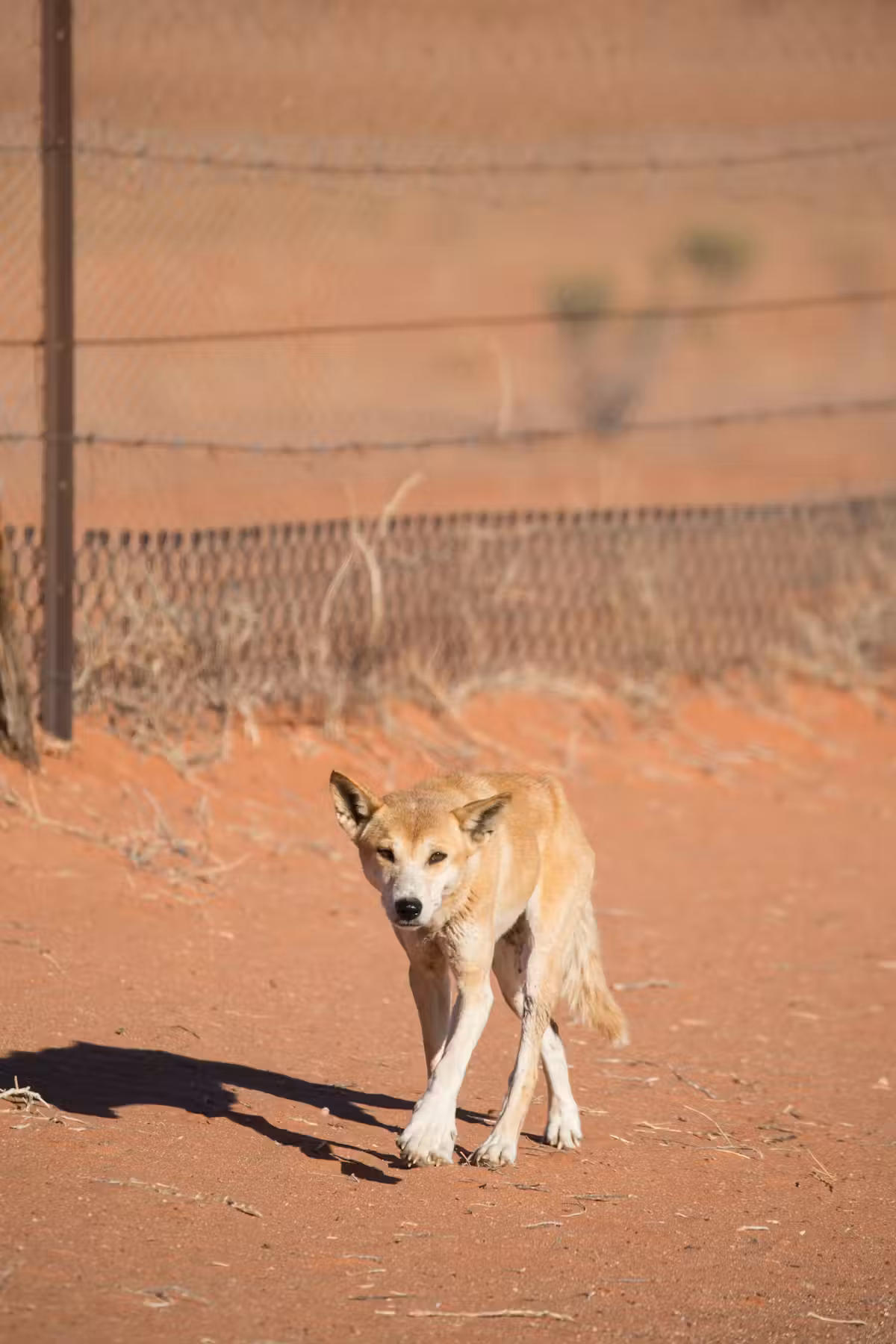
This was encouraging.
The fence worked. That is where the trouble begins with this thing.
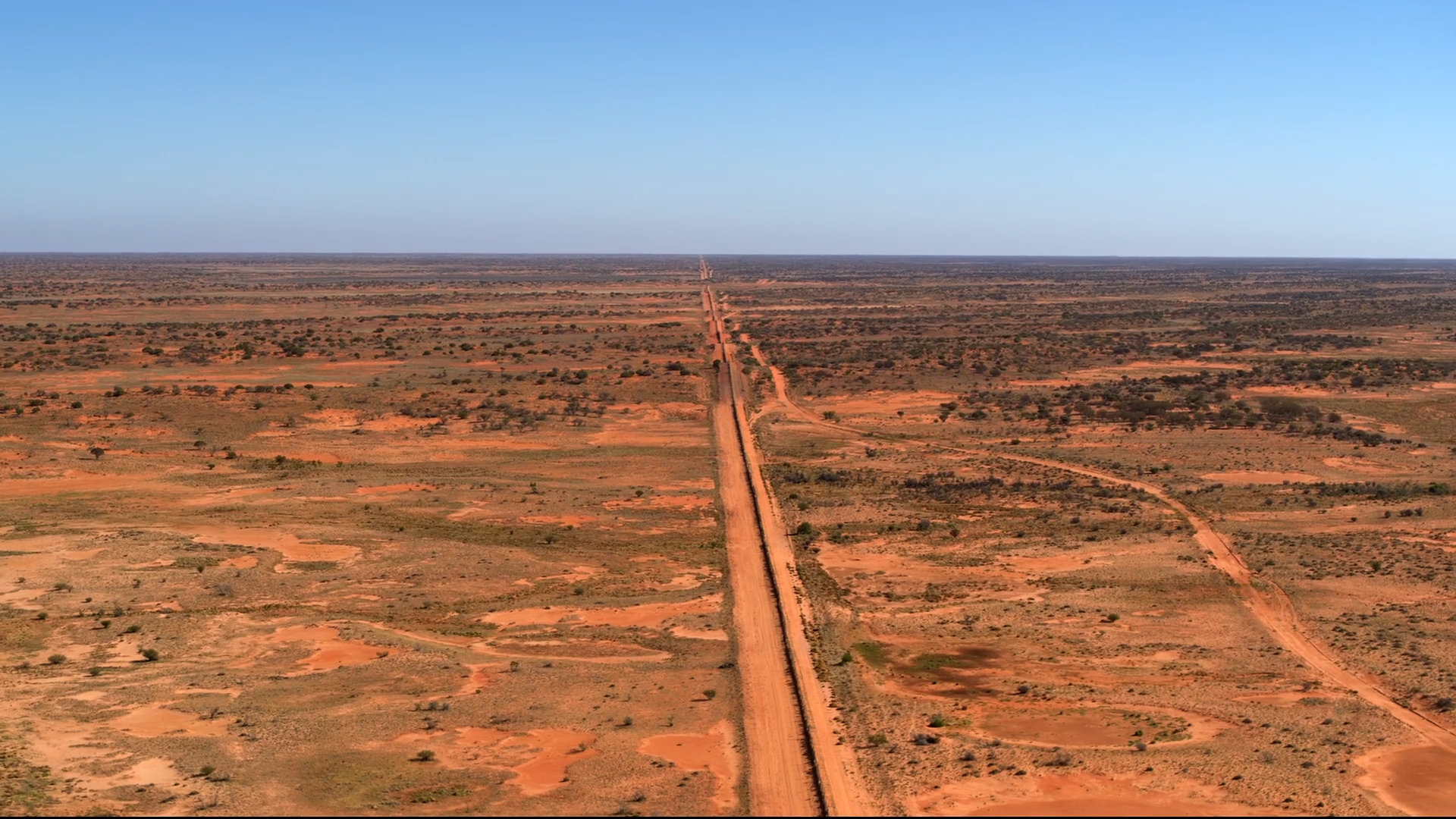
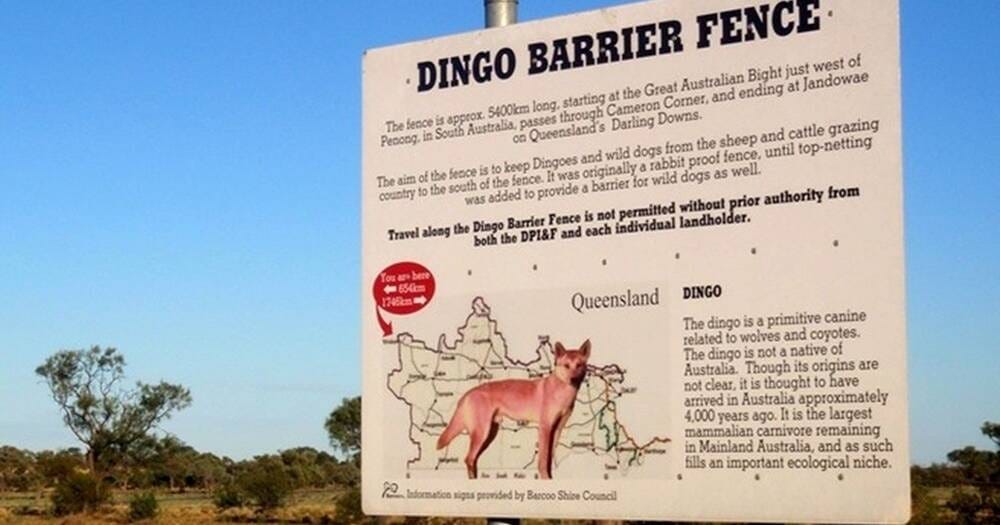
The Dingo Fence now runs for more than 5,600 kilometres across parts of Queensland, New South Wales, and South Australia. It crosses grassland, scrub, desert, roads, stations, reserves, state borders, and the traditional lands of many First Nations peoples before ending above the Great Australian Bight.
This line has one famous job:
Keep dingoes out of sheep country.
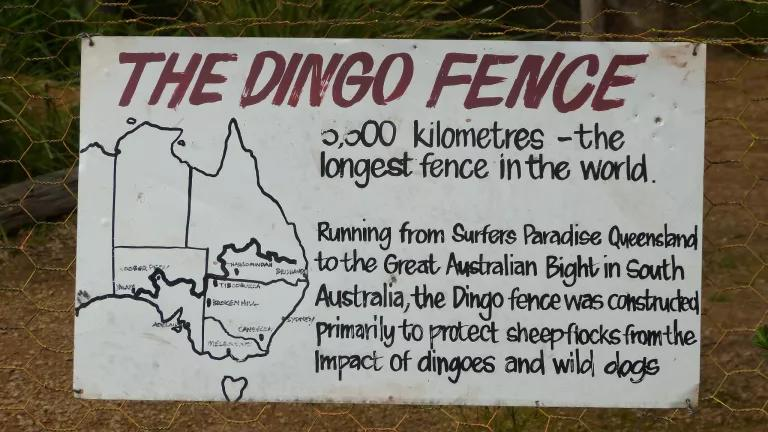
It has done that job well enough to create two ecological regions on either side of the wire.
Australia finally gets a point.

This is the problem.
◆ ◆ ◆
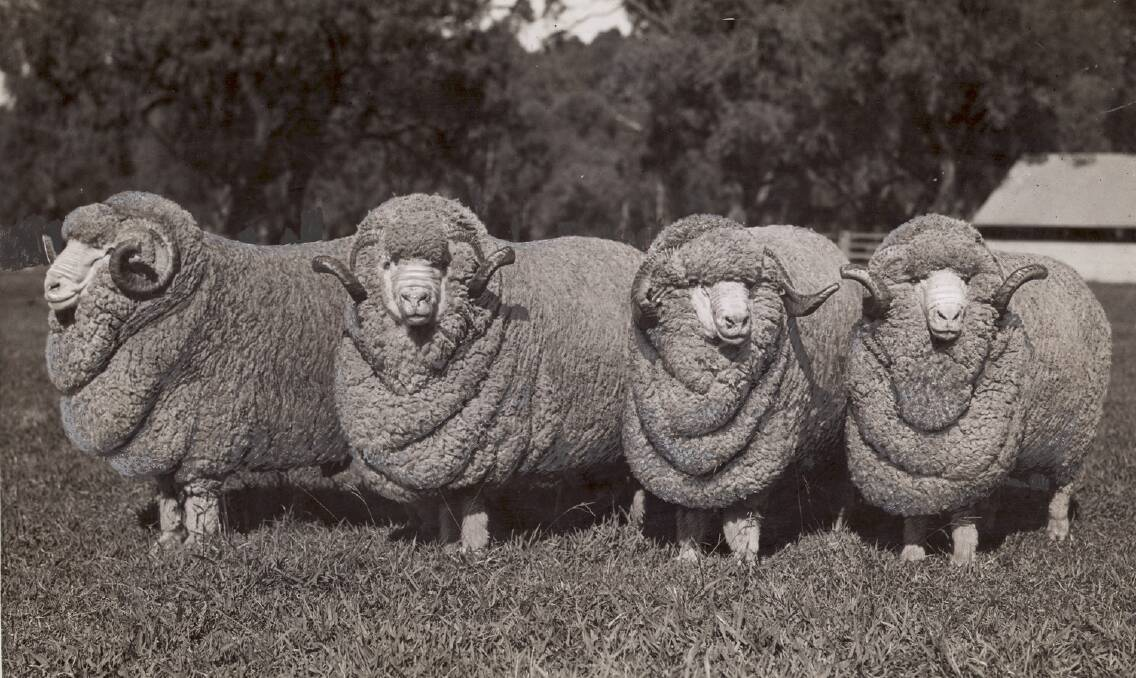
The dingo did not begin this relation by approaching a field full of Australian sheep.
The sheep arrived.
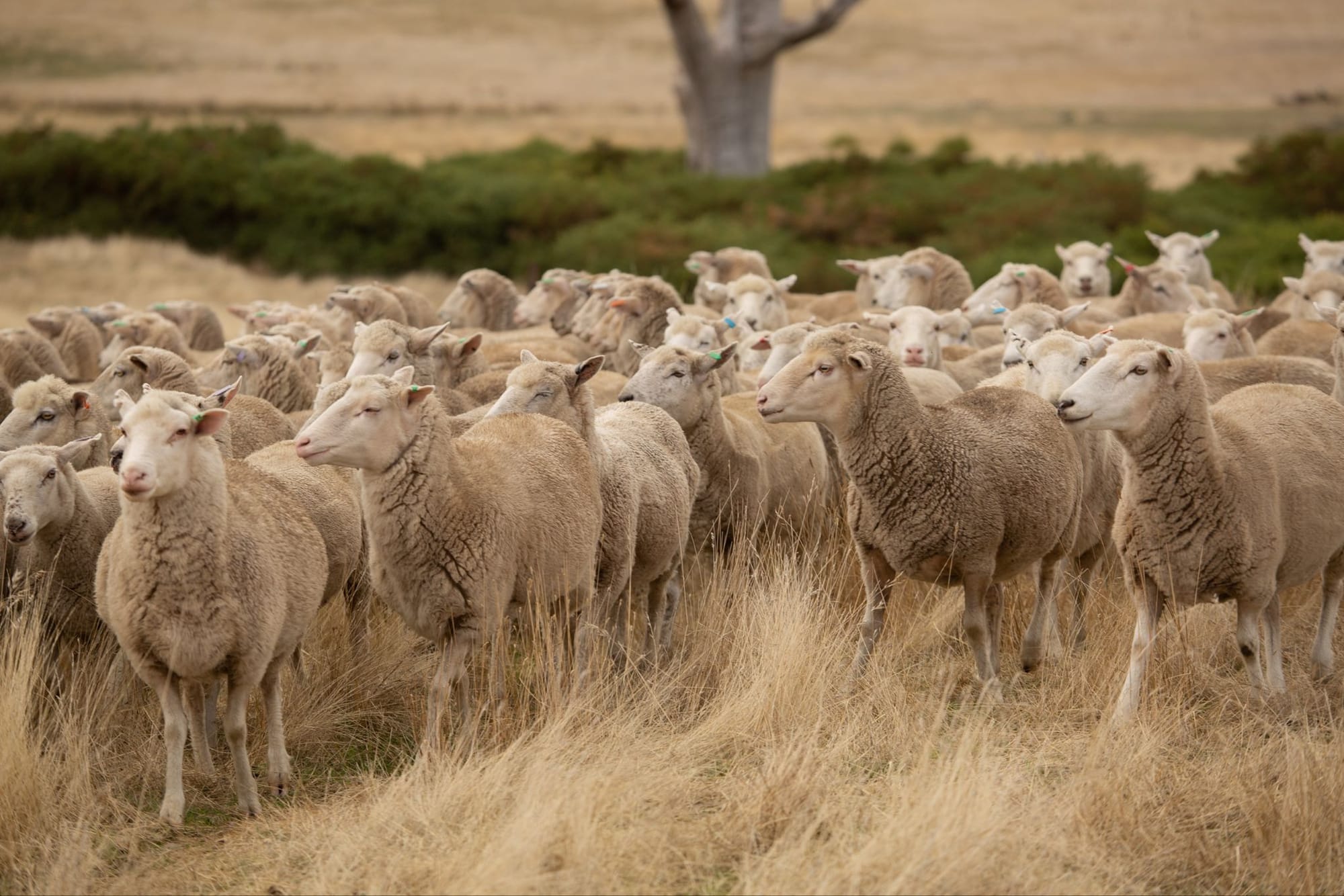
British settlement carried sheep into a continent already occupied by predators, prey, fire regimes, water systems, Indigenous law, hunting relations, sacred geography, migration paths, and a very large number of living arrangements that had not requested wool production as their new organizing principle.
The sheep were vulnerable.
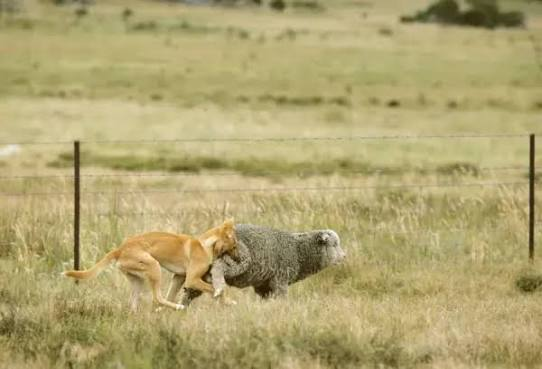
This part should not be softened into symbolism. Dingoes can kill sheep. They may injure more than they consume. A single attack can leave bodies, wounded animals, frightened flocks, exhausted workers, and a pastoral household facing a loss that is economic, practical, and animal at once.
A dead sheep is not a theory of colonialism.
That is a dead animal.
A wounded sheep does not become less wounded because the predator has an ecological role.
The farmer who walks into a paddock after an attack is not required to begin with a continent-scale food-web model before caring about the animals in front of them.
The sheep field had a real protection claim here.
South Australia’s own agricultural history records that dingo losses became worse as shepherds were replaced by wire fencing. Direct human supervision gave way to large enclosed flocks distributed across immense properties. Internal fences reduced the labor needed to hold the sheep together. They also created a new vulnerability: many animals now stood behind wire that could contain them without protecting them from what entered.
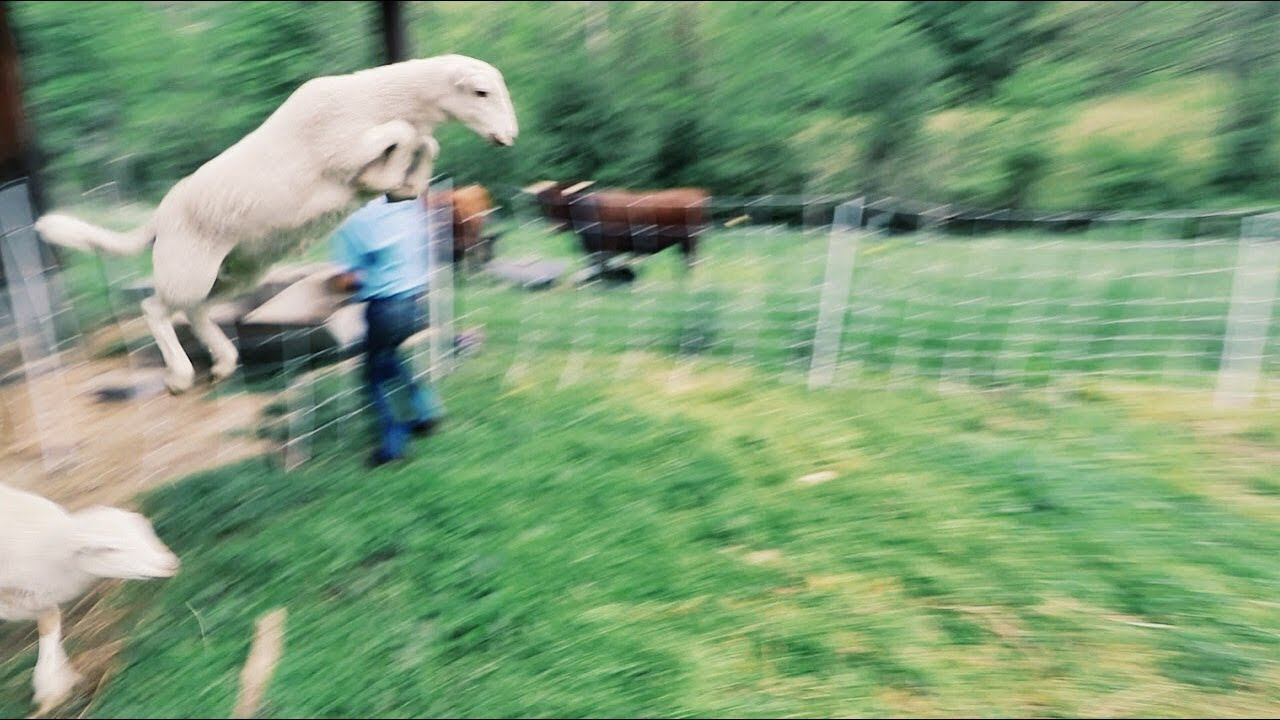
The first fence changed the pastoral arrangement.
The changed arrangement required another fence.
The local fence created the pastoral arrangement that required the Dingo Fence.
This is how instruments grow.
They solve one relation, alter the field around it, then return as the answer to the vulnerability produced by the first solution.
The sheep did need protection.
The question was how much of the continent would have to become sheep-security infrastructure before the protection counted as complete.
◆ ◆ ◆
The dingo is inconvenient for any clean Australian category.
It arrived on the mainland thousands of years ago. Archaeological evidence places dingoes in Australia at least 3,500 years before the present, while genetic work points toward an earlier arrival through Southeast Asia. This makes the dingo introduced in the path-historical sense.
Then several thousand years happened.
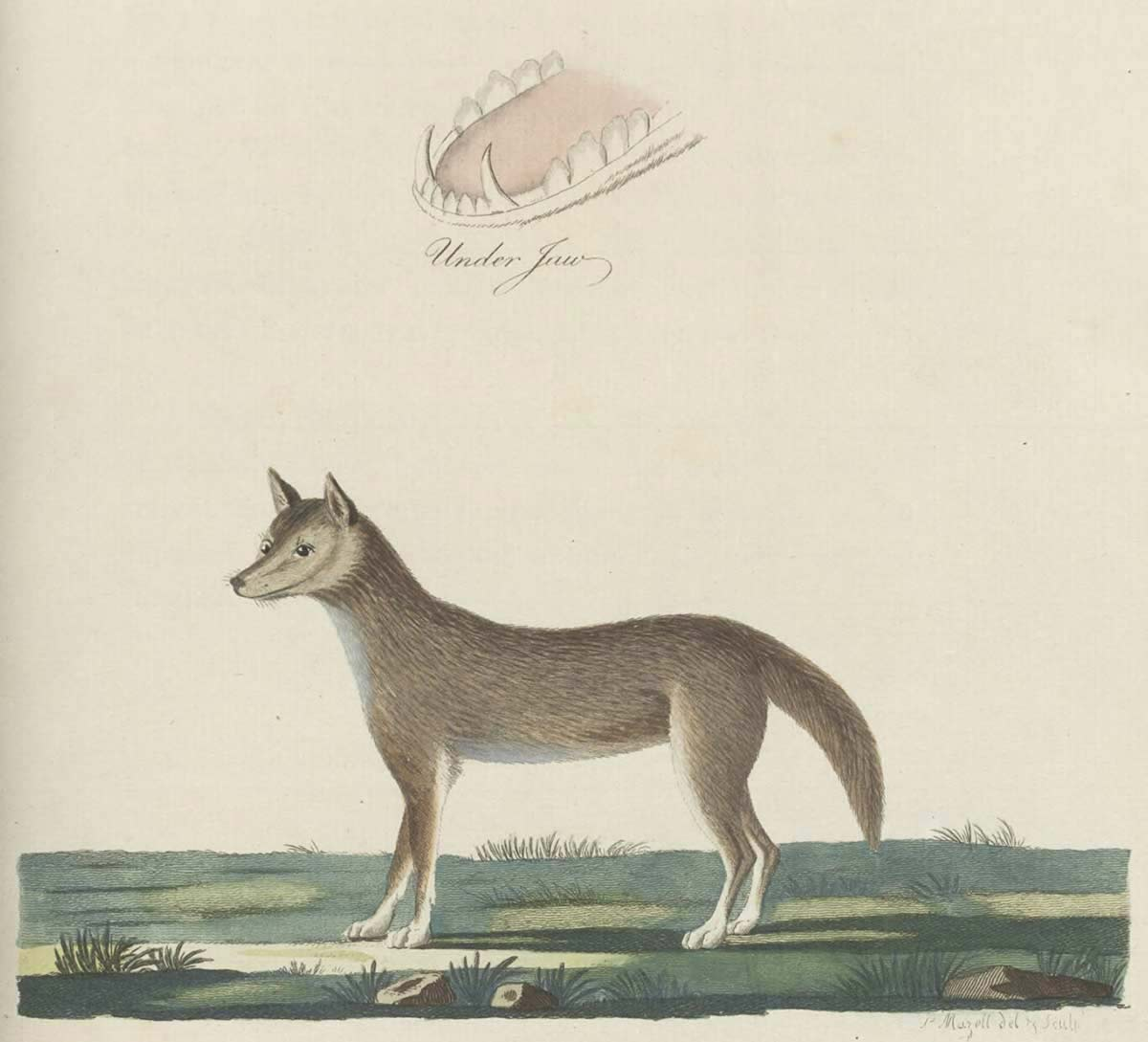
The dingo became a functional top-order predator. It entered ecosystems, prey relations, competition, movement patterns, and the long ecological memory of the continent. It also entered First Nations life as companion, hunting partner, camp guardian, kin, story, songline, ritual presence, and powerful Dreaming.
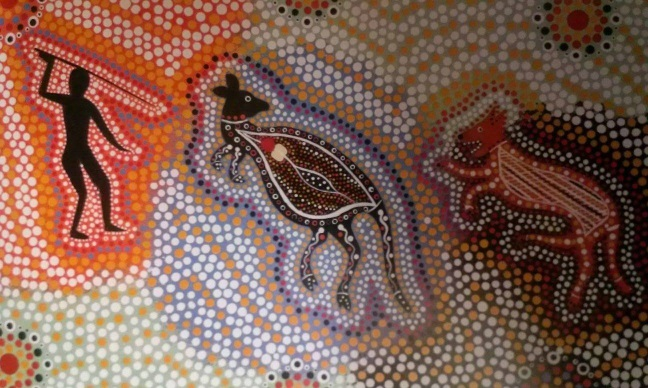
The National Museum of Australia records dingo burials, rock art, sacred geography, and kinship relations that make the animal’s Australian history impossible to compress into a modern pest declaration.
“Introduced” describes a path. It does not finish the field analysis.
These are different histories.
Pastoral administration found a shorter description.
Wild dog.
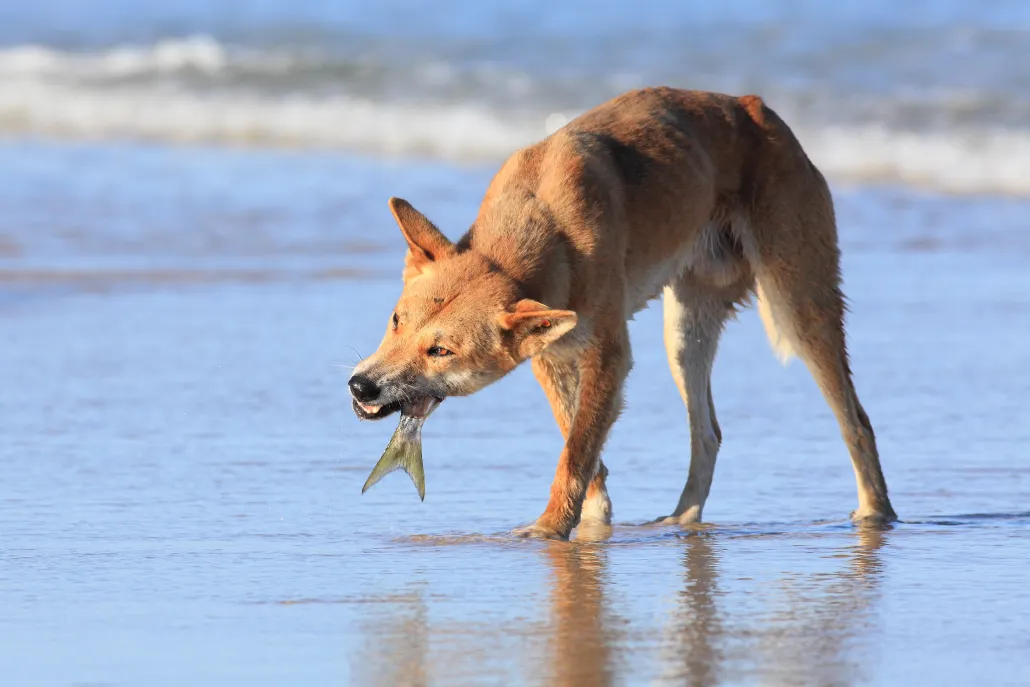
This term has operational uses. Domestic dogs can become feral. Dingoes and domestic dogs can interbreed. Hybrids can attack livestock. A person managing an immediate livestock threat may not be able to hold a taxonomy seminar while something is inside the paddock.
This term also performs a convenient compression.
“Wild dog” can make the target sound like a domestic animal that wandered away from its proper place and became dangerous. The ecological and cultural history shrinks. The destruction order becomes easier to issue because the object has already been translated into failure.
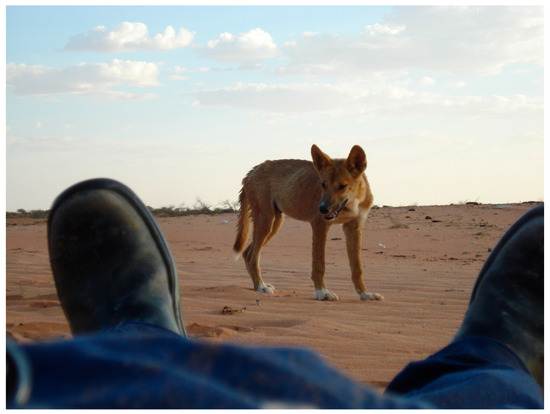
Recent genetic work has made this translation harder to defend. Researchers using much larger DNA-marker sets found that most sampled wild canids were pure dingoes or overwhelmingly dingo in ancestry, with few genuinely feral domestic dogs in the wild-caught samples. The “wild dog” field often contained dingoes under a policy name.
The pastoral field called the dingo a wild dog because “top-order predator carrying several thousand years of ecological and cultural history” was badly optimized for a baiting notice.
This does not make genetic purity the ethical primitive. A hybrid animal can still occupy real relations. A pure dingo can still kill sheep. A domestic dog can still become ecologically active. The question is always what the living population is doing, what the control instrument is doing, and which field disappears when classification gets too convenient.
The dingo had two official histories available:
The fence chose one.
◆ ◆ ◆
The Dingo Fence did not appear in one heroic line. It began with smaller defensive cells.
Sheep graziers built dog-proof netting around properties. Neighbouring properties joined their boundaries. Local enclosures became larger protected districts. South Australia eventually organized vast vermin-fenced regions, and at their peak those districts contained more than 48,000 kilometres of fencing.
The local fence had a clear object.
This is the fence at its most defensible.
It protects a specific locus through a specific crossing relation. It can be inspected against a known flock, a known property, and a known maintenance obligation.
Then the cells joined.
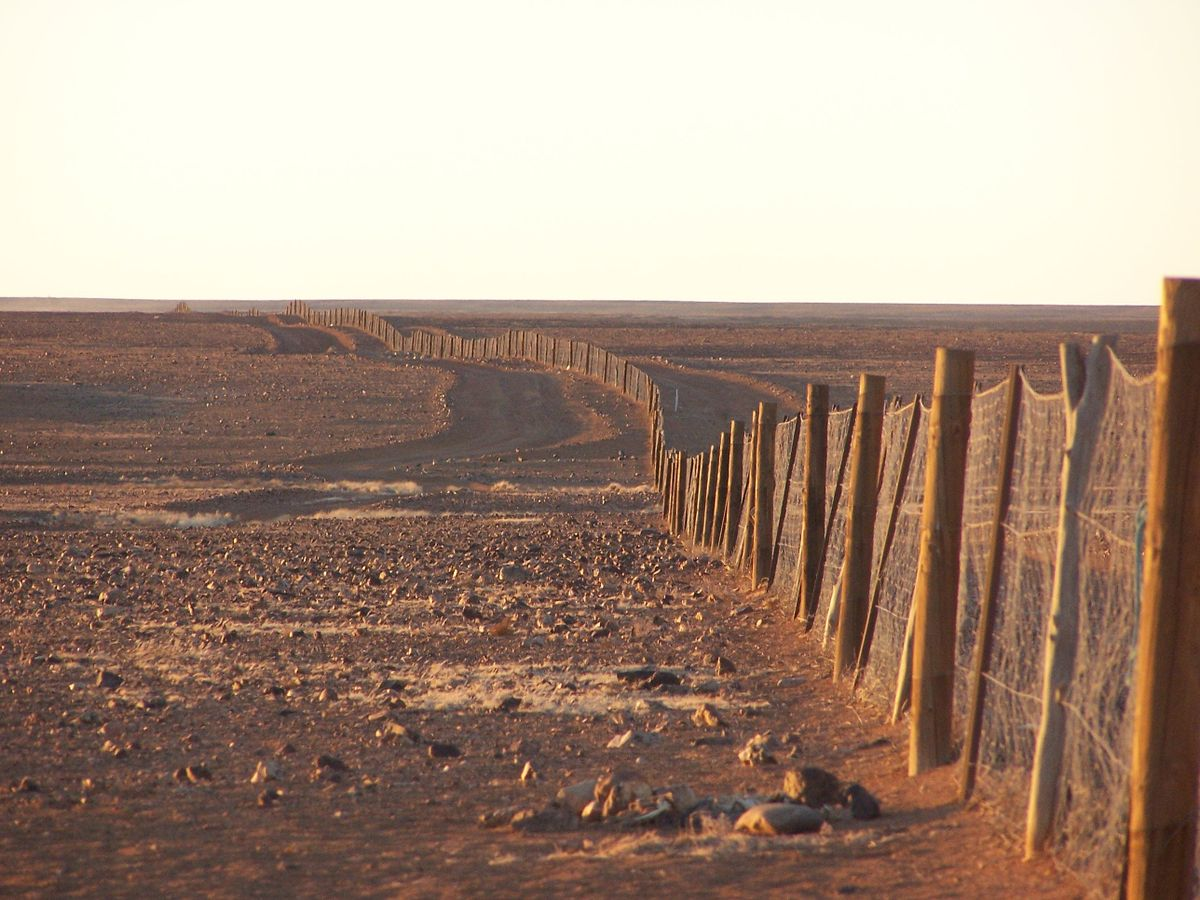
The protected interior expanded. The line moved farther from the animals it was meant to protect. The instrument became less responsive to a flock and more authoritative over a landscape.
The first fence protected sheep from a dingo.
The joined fence began protecting a region from the presence of dingoes.
That is a change in moral scale.
◆ ◆ ◆
The great network of internal vermin districts was difficult to maintain. Some southern districts had not seen wild dogs for years. Labor and materials became harder to secure. The Second World War made maintenance worse. By the 1930s, South Australian stockowners were already discussing whether the many internal fences should be abandoned in favor of one outer line.
This was administratively sensible.
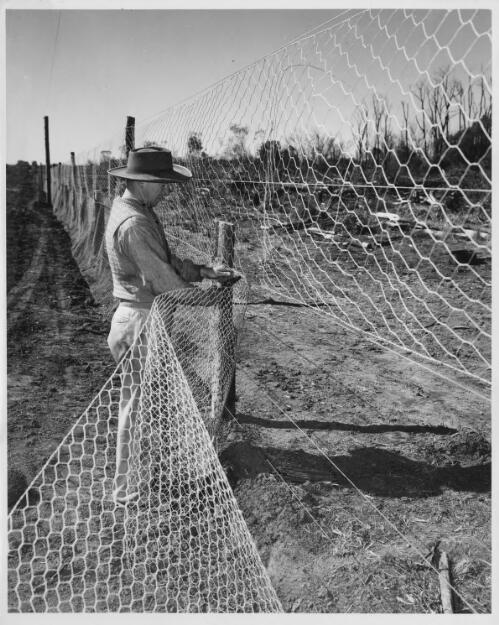
Forty-eight thousand kilometres of scattered obligation is a terrible thing to keep repaired. A single perimeter can concentrate labor, money, patrol, inspection, and authority.
The local cells were consolidated into the outside fence.
The Dog Fence Act 1946 gave the South Australian state an enduring administrative instrument. The Act came into operation in 1947. Realignment continued into 1960. A Dog Fence Board could now govern the line as a continuous public function.
Many owners became one perimeter.
Many local encounters became one classification.
Many fences became The Fence.
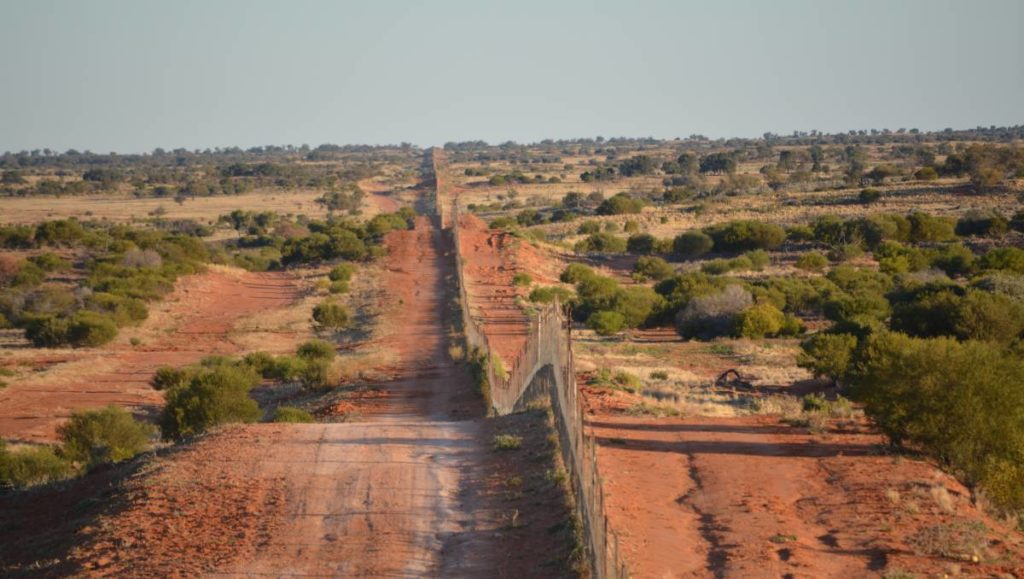
This is what institutional efficiency often looks like from the center:
The same move looks different from the field.
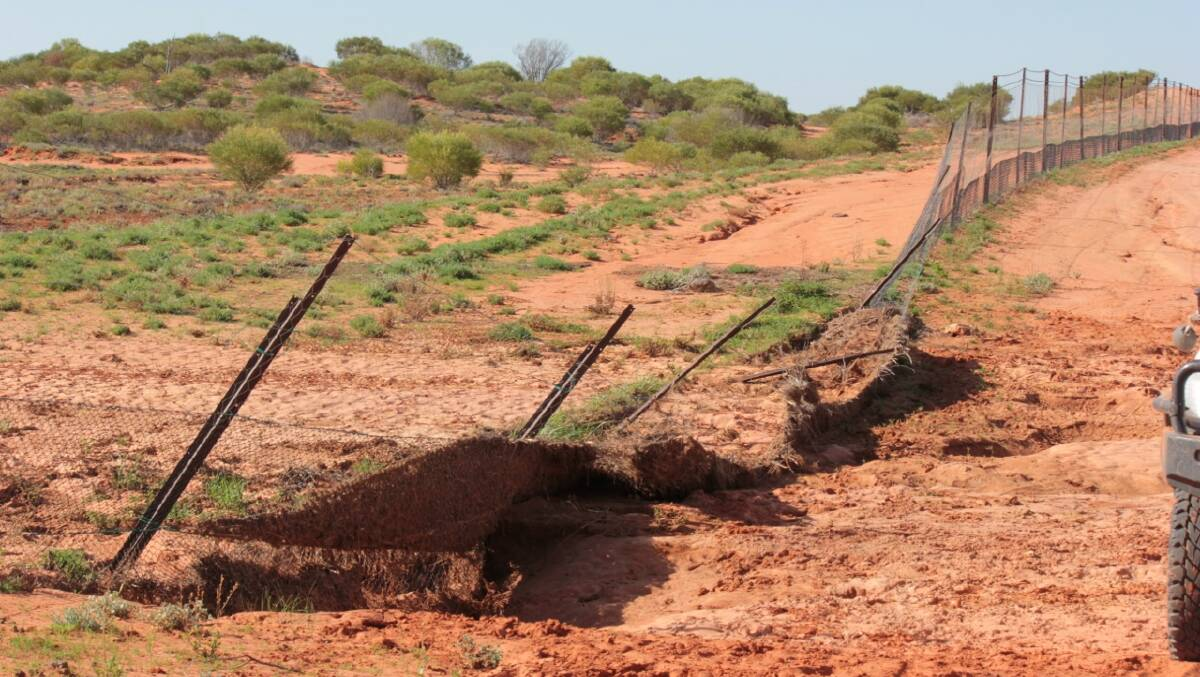
A local livestock barrier has become a territorial partition between two acceptable ecological states.
Today, South Australia maintains 2,110 kilometres of the larger system. Owners must inspect relevant sections at least every fourteen days, keep the fence dog-proof, and destroy wild dogs nearby through baiting, trapping, or shooting. The Dog Fence Board inspects half of the line each year, coordinates works, raises rates, and keeps the barrier alive through repeated return.
The Dingo Fence is not wire. It is:
The Rabbit-Proof Fence taught us that the completed fence was a photograph.
The Dingo Fence agreed.
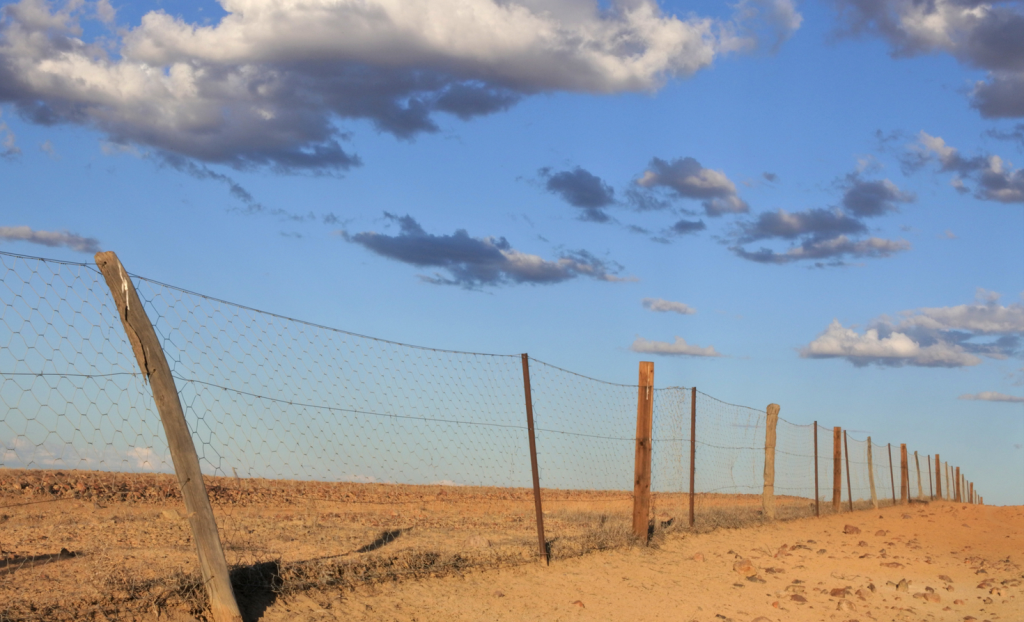
Then it made maintenance into government.
◆ ◆ ◆
The rabbit found the line too late, too porous, too slow, and too far behind its own reproductive field.
The dingo met a different instrument.
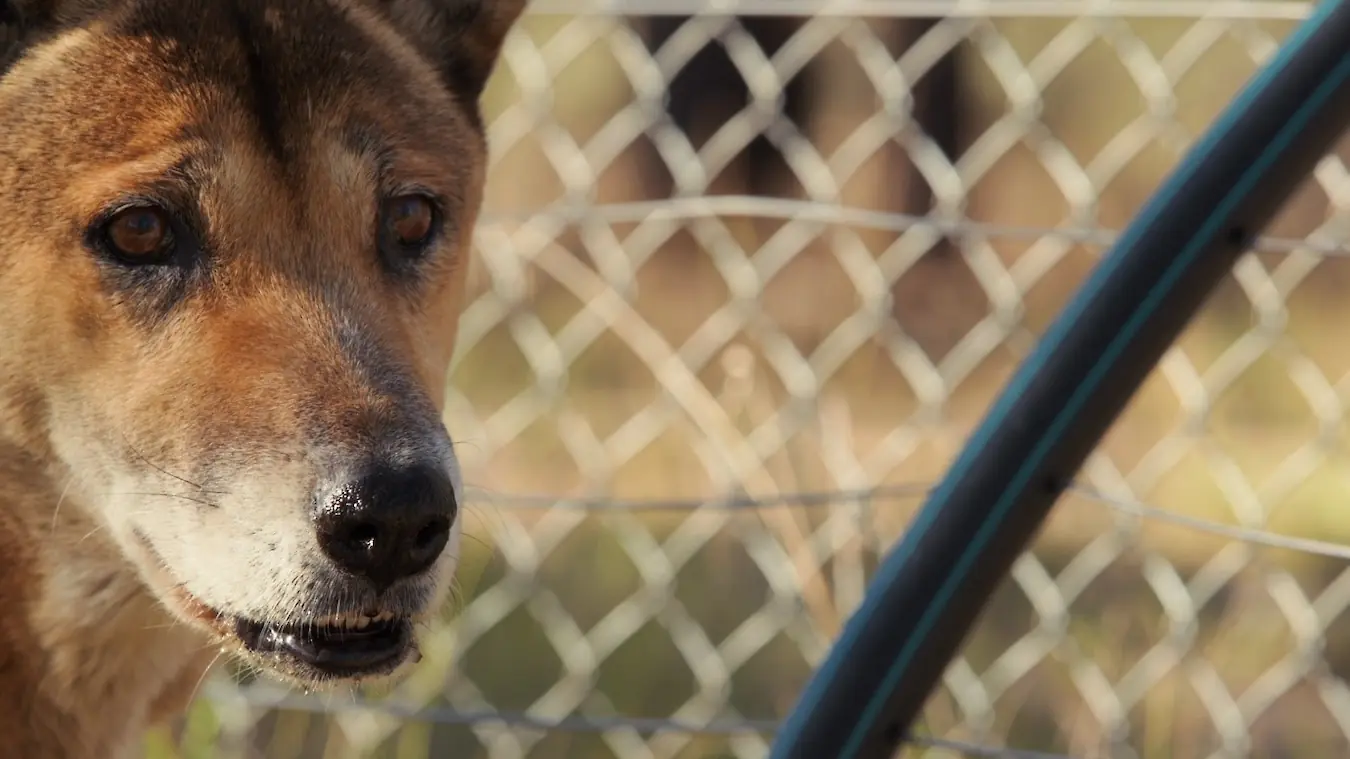
The barrier was taller. The target was larger. The animal reproduced more slowly. Its movement along the fence could be tracked. The line was supported by traps, baits, shooting, patrol, and an interior policy that treated remaining dingoes as breaches to remove.
This one worked.
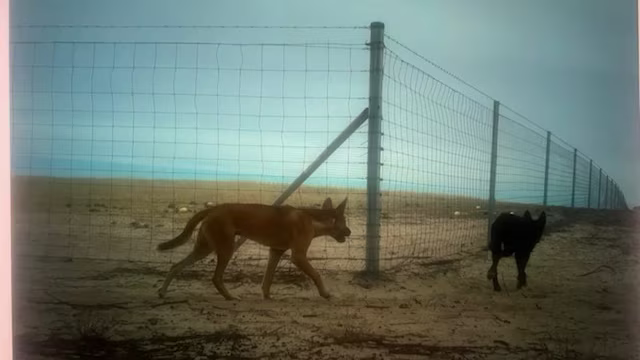
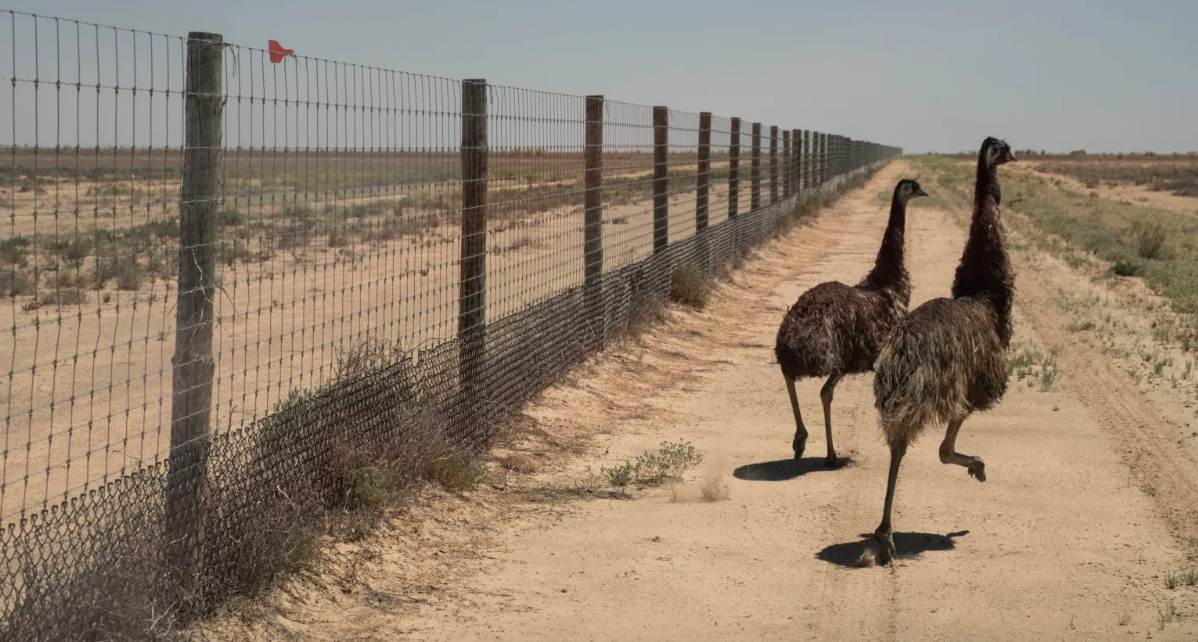
Not perfectly. No continental fence is perfect. Dingoes still appear inside. Gates open. Weather damages sections. Kangaroos, emus, camels, erosion, and time keep filing their amendments.
Yet the difference across the boundary is real. Dingo abundance is much lower through much of the protected sheep zone than on the far side. The line helped make large regions of sheep grazing economically and practically continuable. It reduced predation pressure. It protected vulnerable flocks. It supported livelihoods whose continuation would otherwise have become much harder.
South Australia continues to describe the fence as critical infrastructure for a livestock industry valued at $4.3 billion. Since 2020, the state has been rebuilding more than a thousand kilometres of old, brittle fence, replacing sections damaged by weather, sand, wild animals, and a century of being expected to stand still while the continent continued.
Australia gets the point. Put it on the board.
AUS: 1
BIO: 2
This is the problem.
A failed instrument can be corrected because the failure is visible. A working instrument can preserve its model for generations.
The Dingo Fence kept the predator away from the sheep.
It also taught the protected region to treat that result as the whole meaning of success.
◆ ◆ ◆
The pastoral description was correct.
The description was incomplete.
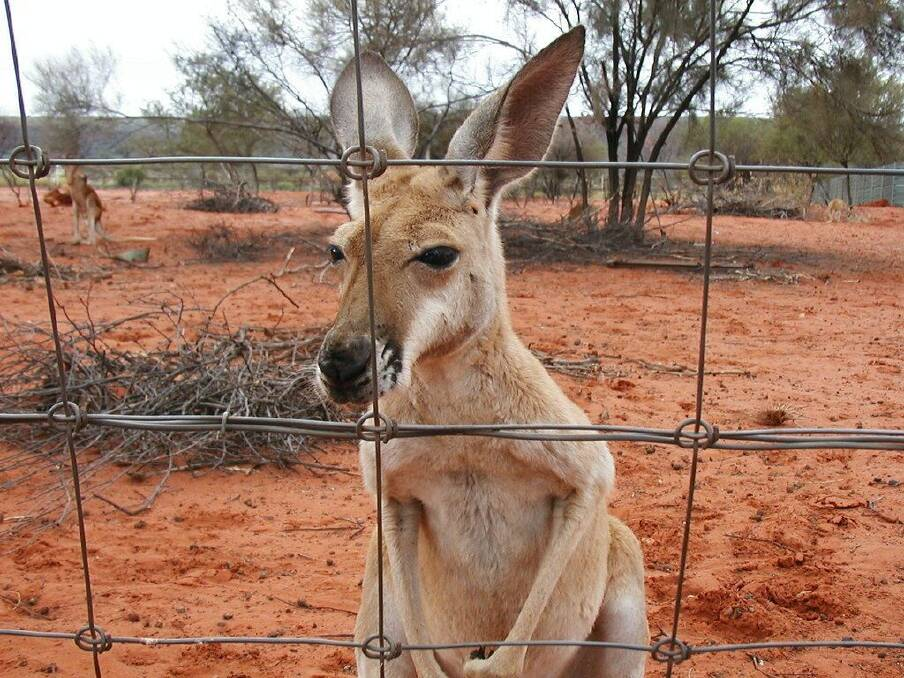
The dingo also kills kangaroos and emus. It consumes rabbits. It competes with foxes and feral cats under some conditions. It scavenges. It changes where prey move, rest, feed, gather, and take risks. It applies pressure through presence even when no kill occurs.
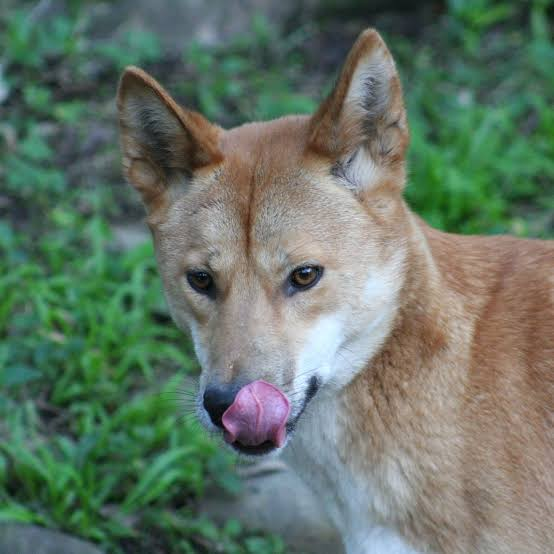
The predator’s work is distributed.
No office receives a single clean invoice for:
These are hard facts to administer because they do not arrive as one dead sheep beside one fence.
Predation was the visible transaction.
Regulation was the distributed work.
The fence could see the transaction.
The field retained the work.
This difference matters because security instruments are always tempted by the harm they can count immediately. The killed animal, breached border, stolen object, damaged crop, and attacked person enter the record with urgency.
The protective instrument responds.
The relations prevented by the response enter slowly, diffusely, and without a claimant standing beside them.
A sheep corpse can be photographed before lunch.
A changed trophic structure may require decades, field surveys, satellite data, contested models, and several ecologists who no longer enjoy speaking to one another.
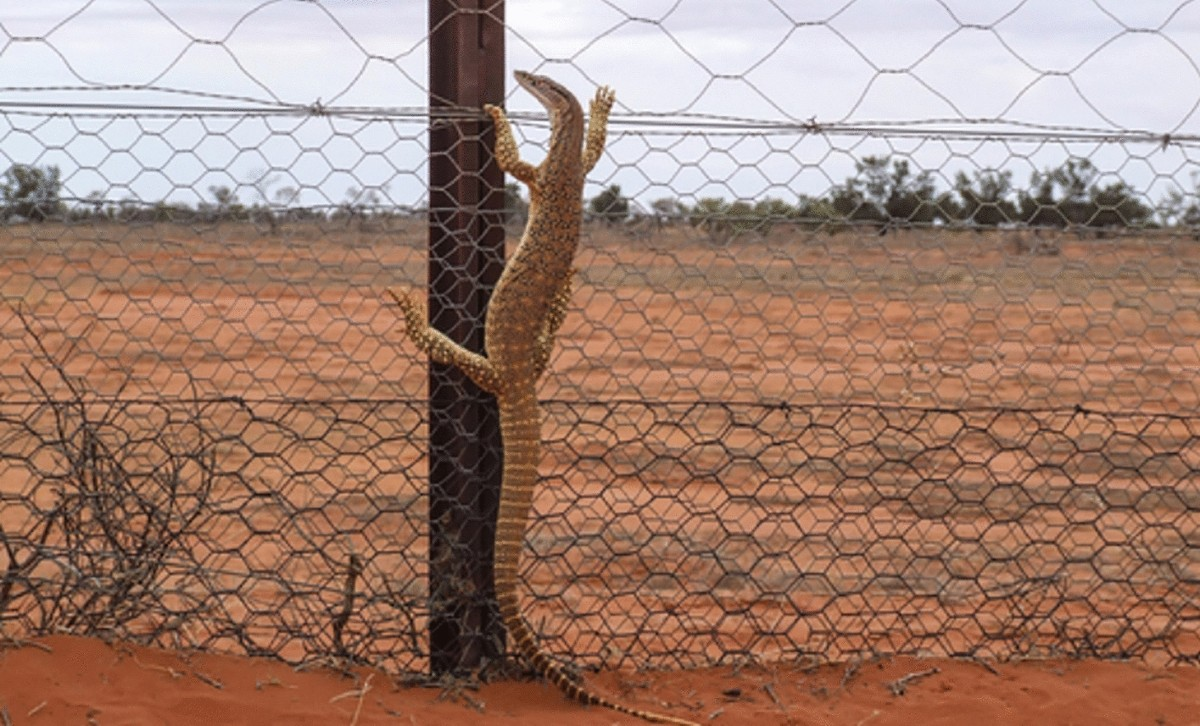
This gives the security instrument a narrative advantage.
The protected harm is vivid.
The generated field is statistical.
◆ ◆ ◆
The Dingo Fence became one of the largest unintended ecological experiments on Earth.
The responses diverged.
Researchers have repeatedly found more red kangaroos and emus on the dingo-suppressed side under some conditions. Other studies have reported differences in small-mammal communities, fox activity, grazing pressure, vegetation, soil nutrients, shrub patterns, and dune form.
Then the satellites joined the argument.
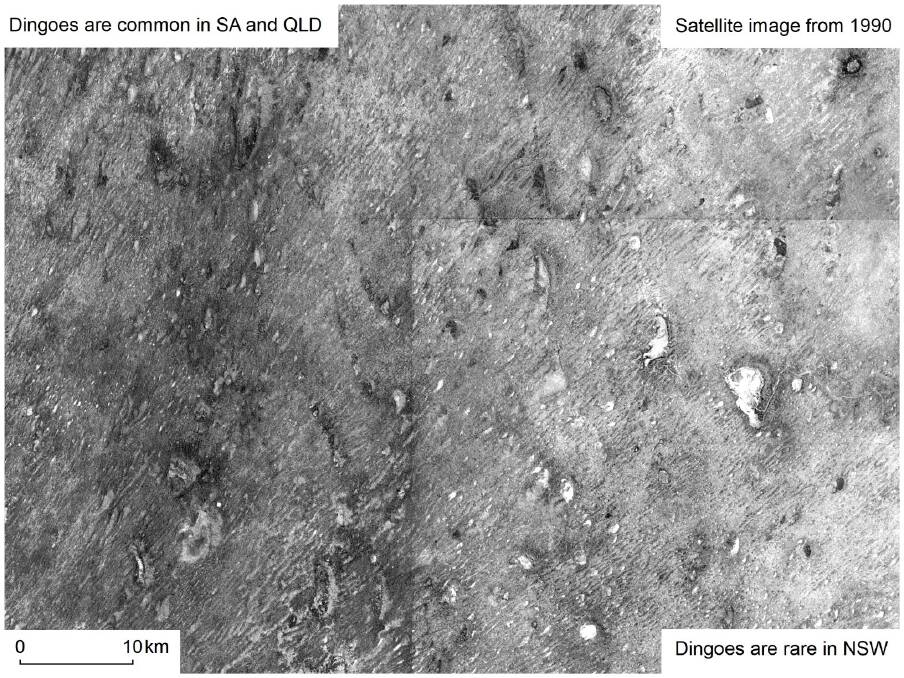
A UNSW study paired site observations with thirty-two years of Landsat imagery from the Strzelecki Desert. Rain produced vegetation growth on both sides. The dingo-suppressed side showed poorer long-term growth and less cover. The researchers linked much of the difference to greater herbivore pressure while acknowledging rainfall, land use, and other contributing factors.
Australia built a predator fence so long that the ecological consequences became visible from space.
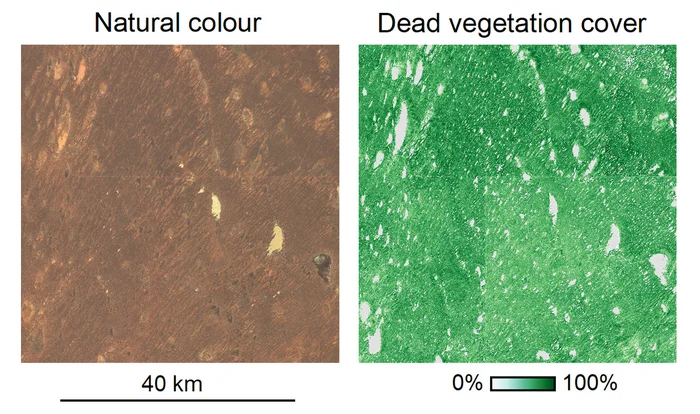
This is hard to improve upon as a diagnostic image.
From the ground, this line says:
Sheep country begins here.
From orbit, the line says:
Two different ecological histories have been generated here.
The Dingo Fence did not divide one landscape. It helped produce two landscapes.
The biosphere did not defeat the fence by crossing it.
The biosphere answered through the success.
◆ ◆ ◆
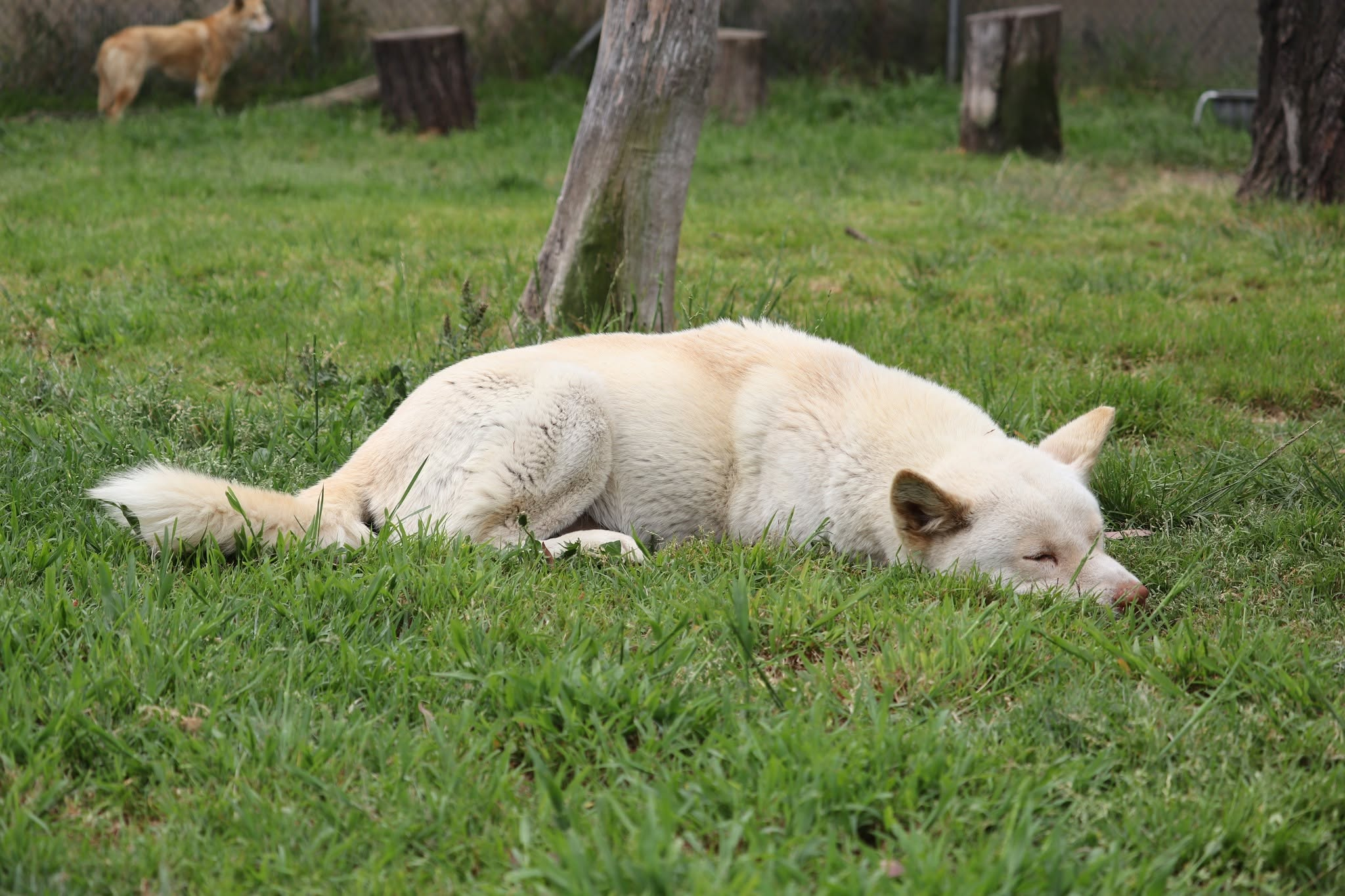
It’s important to note that the dingo is not the secret king of Australia.
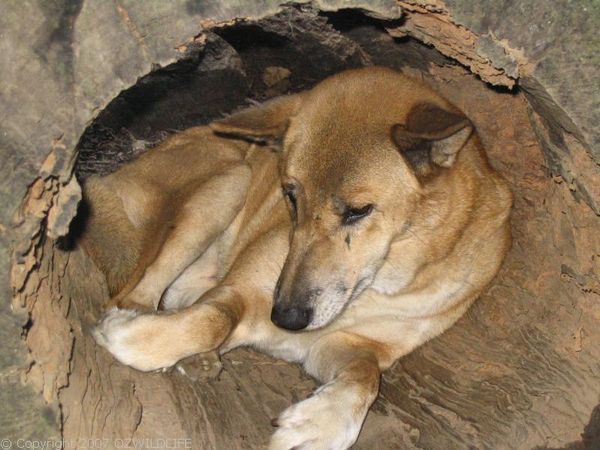
It does not govern every ecological relation wisely. It kills native animals as well as introduced ones. It can threaten vulnerable wildlife. It can kill pets, livestock, and occasionally people. Its effects vary by rainfall, habitat, prey density, land use, poison regime, population structure, fox and cat abundance, and the scale at which the field is measured.
The evidence for strong dingo-driven trophic cascades is also contested.
Some ecologists argue that dingo suppression produces wide cascading effects through kangaroos, foxes, cats, small mammals, vegetation, and soil. Critics have identified confounding variables, weak replication, sampling bias, uncertain causal direction, and the difficulty of treating a continental fence as a clean experiment. Reviews have warned that claims about the dingo as a general biodiversity regulator exceed what some studies can firmly establish.
The dispute belongs inside the article.
The narrower conclusion survives the argument.
◆ ◆ ◆
A perimeter creates an interior.
Inside the Dingo Fence:
The fence does more than stop movement. It teaches the field how to classify movement.
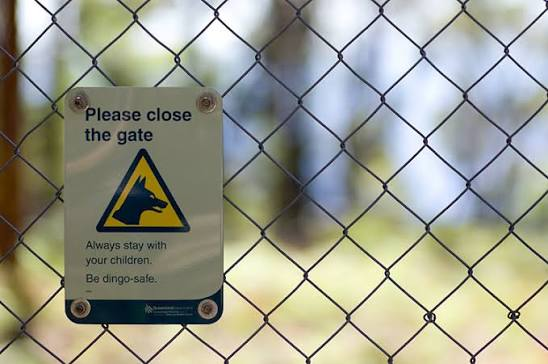
A dingo approaching sheep is a danger. A dingo inside a proclaimed dog fence is also a breach condition. Its presence now carries administrative meaning before anyone examines what else the animal is doing in that landscape.
The line assigns authorization.
This makes the pastoral arrangement look older than the protection that produced it.
The sheep field begins to appear natural, settled, prior, and morally self-explanatory. The predator appears as the newcomer to the protected world even though the predator’s Australian history is thousands of years older than the sheep’s.
Security instruments do this constantly. They begin by protecting a vulnerable relation. Then the protected arrangement becomes the unquestioned interior. Everything excluded by the protection becomes easier to treat as external pressure, interference, contamination, or threat.
The fence’s deepest power is therefore classificatory.
It turns geography into permission.
The animal did not change species at the wire.
The field changed jurisdiction.
◆ ◆ ◆
The Dingo Fence does not protect “Australia” in one undifferentiated sense.
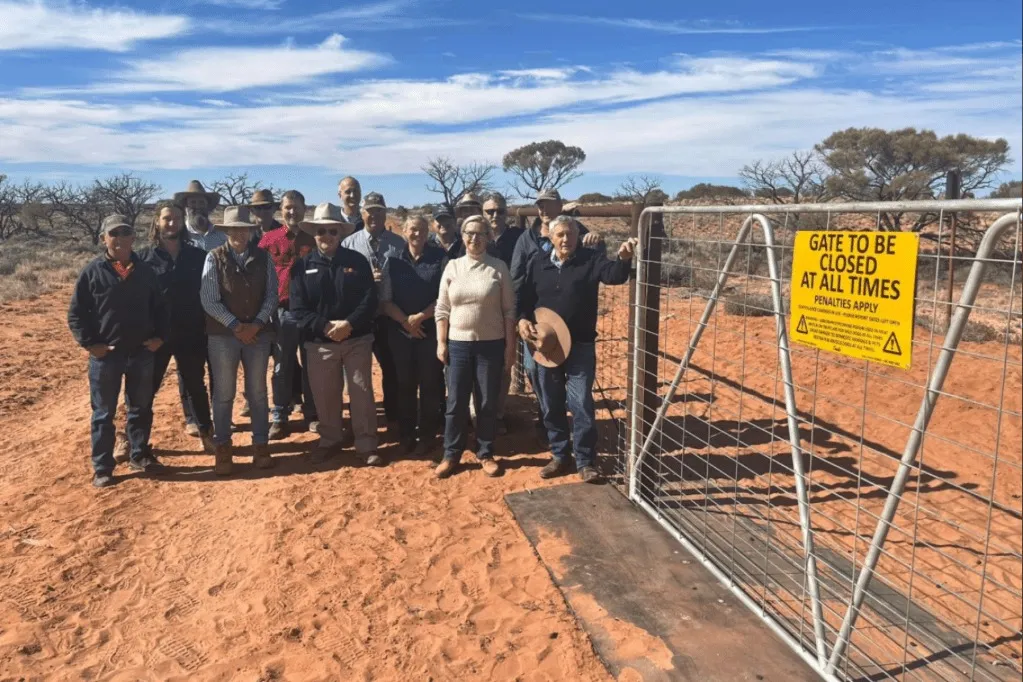
It protects a very particular agricultural arrangement.
That arrangement contains:
These are real loci. The sheep are especially easy to lose inside the abstraction. They are living animals bred into a field that makes them vulnerable and then defended through a larger field of lethal exclusion. Their welfare matters before the industry turns them into output and before the ecological argument turns them into symbols of settlement.
Protecting them can be good.
The protection still has to answer for what it makes reachable.
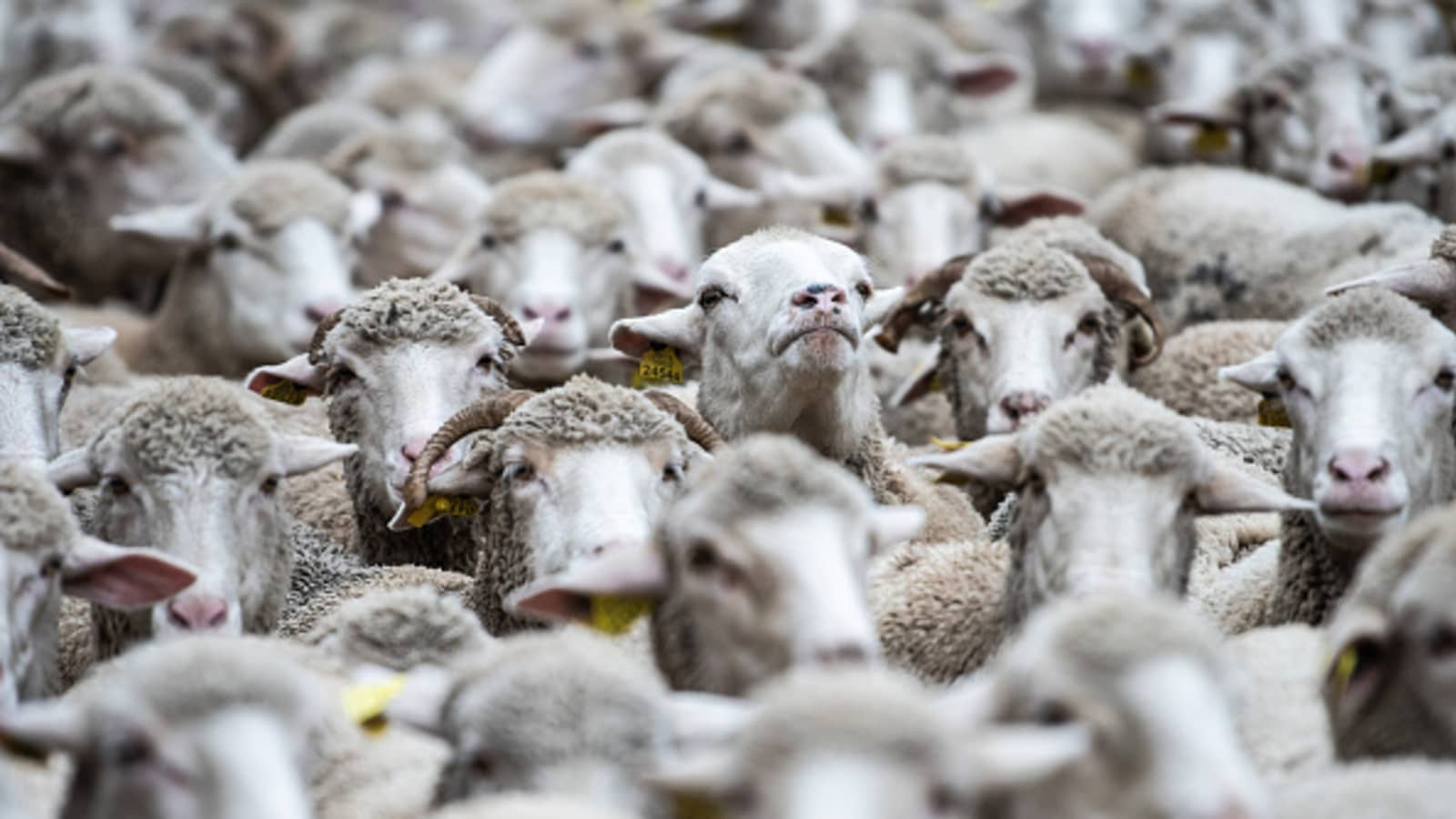
The fence helped produce sheep country as a durable regional fact. It lowered one form of resistance to pastoral continuation by raising resistance against dingo continuation inside the same area.
That trade cannot be settled by declaring one side innocent.
This is the kind of field where Modal Path Ethics requires Better.
The available paths here already carry damage.
Better begins after the clean answer has failed.
◆ ◆ ◆
The Dingo Fence remains active infrastructure.
It is being rebuilt.
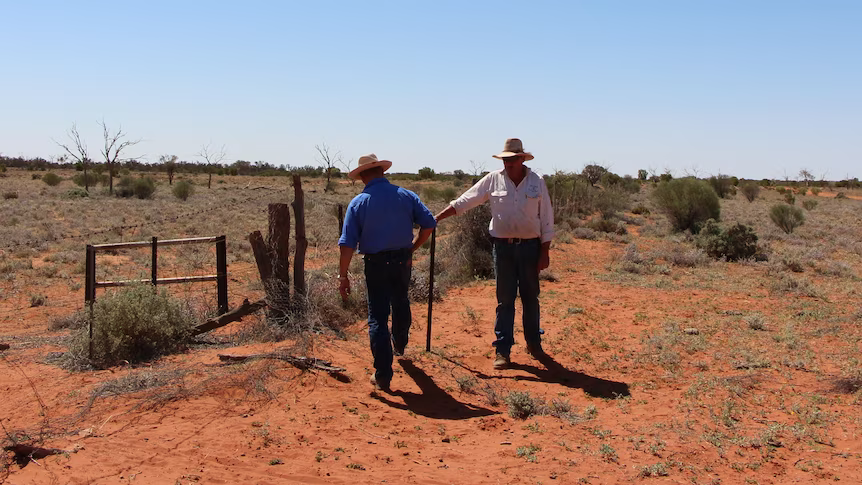
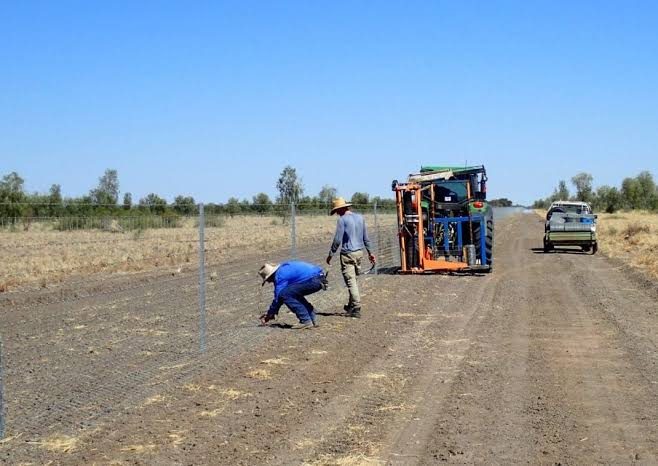
In 2018, more than two-thirds of South Australia’s section was over a century old. Kangaroos, emus, camels, wild dogs, sand, weather, and time had made the line brittle. A large replacement program began in 2020. By June 2025, more than 1,070 kilometres had been rebuilt, with additional sections under construction or contract.
In June 2025, South Australia and New South Wales agreed to build up to 290 kilometres of new border fence, with completion planned before the end of the decade.
A degraded fence can impose costs without delivering the protection that justified those costs. Repairing it is not automatically a moral regression.
The rebuild does, however, make one question current:
What field are we making more durable when we strengthen the line?
The answer cannot stop at “the livestock industry.”
The fence also makes durable:
Infrastructure carries policy into the future by making the old arrangement expensive to reconsider.
Every rebuilt kilometre is better at being a fence.
The ethical work is making sure the field becomes better at reading what the fence does.
◆ ◆ ◆
The easiest ending would call for the fence to come down.
That would be satisfying, dramatic, and badly under-instrumented.
The Dingo Fence has real competence.
This guy can:
Protection is the fence’s legitimate function.
Distortion begins when protection becomes sovereign over the field it preserves.
A corrected security instrument would keep several obligations alive at once.
A fence becomes safer when it knows the line is inside the biosphere, not drawn above it.
◆ ◆ ◆
The sheep arrived in a continent that already contained the dingo.
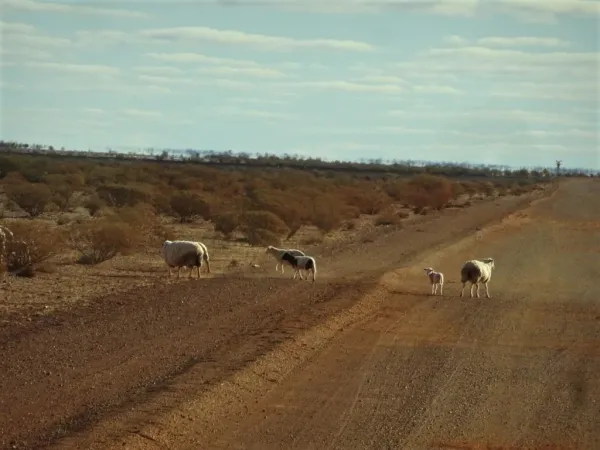
Pastoralists built fences to hold their flocks. The enclosed flocks became easier to manage and harder to protect through direct human presence. Dingo attacks produced real animal suffering and real economic damage. Graziers answered with dog-proof cells. The cells joined. The many internal fences became one outer line.
The Dog Fence Act turned the line into permanent administration. Owners inspected. Boards governed. Contractors repaired. Baits, traps, guns, gates, patrols, rates, and reports held the interior together.
The instrument succeeded.
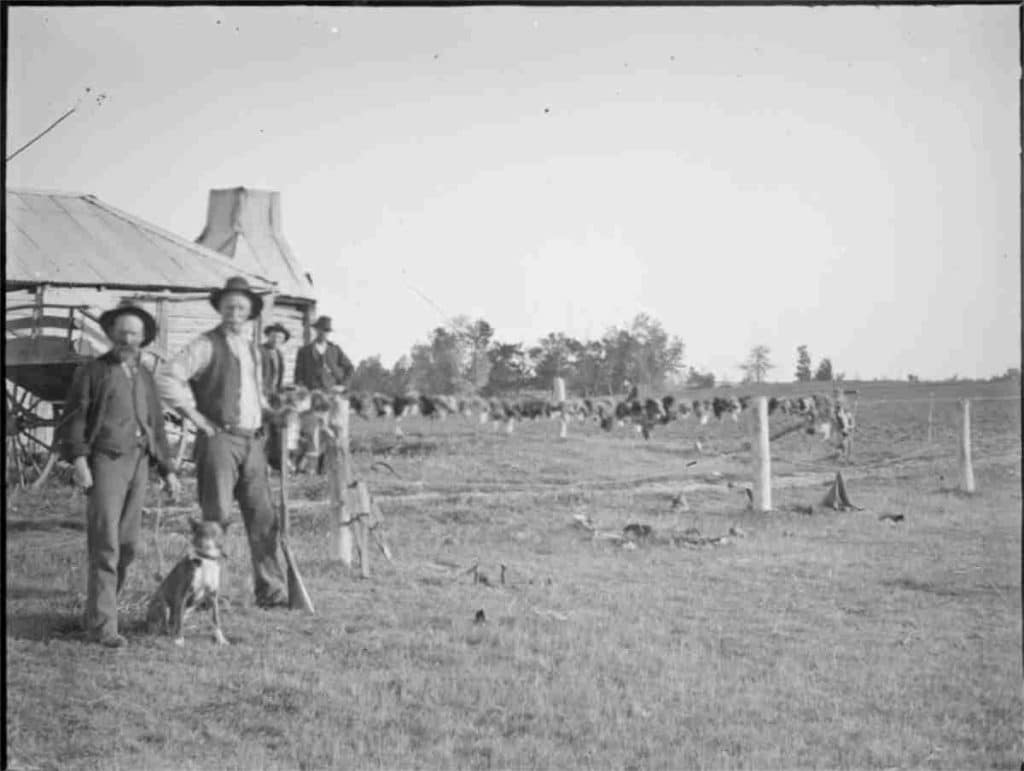
Dingoes became rare across much of the protected sheep zone. Sheep production continued behind the barrier. The line became one of the longest structures on Earth and one of the clearest examples of a security instrument performing exactly what it had been asked to perform.
The evidence available to me did not appoint the dingo king of the biosphere. Ecologists continue to dispute the size, causality, and generality of particular trophic effects.
The narrower indictment remained. The dingo was never only a sheep predator.
The fence treated it that way because the sheep death was the relation the protected field was built to recognize.
A protection instrument saw real harm, built real capability, achieved real success, and allowed its success metric to impersonate the whole field.
The Dingo Fence did not fail because the dingo crossed it.
But it failed wherever crossing became the only question.
Australia found a predator and built an interior.
The interior became normal. The predator became a breach.
The biosphere became whatever happened outside the livestock metric.
Australia keeps the point.
AUS: 1
BIO: 2