
Silicon Valley has discovered two ways for China to win.
This is impressive.
China has become the first geopolitical actor capable of authorizing every American technology company’s preferred business model at the same time.
A recent Guardian report places the split in public view. Nvidia, Microsoft, OpenAI, Meta, and a large coalition of companies argue that open weights support innovation, security, competition, customer control, and national technological sovereignty. Anthropic remains outside that coalition and warns that some sufficiently capable models could become permanently dangerous once the weights escape the developer’s control.
The report also makes the awkward economic alignment visible.
Everyone has an argument.
Everyone also has a revenue model standing very quietly behind the argument with a clipboard.

This does not make the arguments false. Interests can point toward real structure.
The debate fails because it keeps asking which instrument is morally clean.
Neither one is.
Open and closed are release conditions. They alter who can inspect, modify, deploy, withdraw, contest, preserve, and weaponize a model. Their moral status depends on what those transitions make reachable.
The phrase open-source artificial intelligence is currently being asked to carry far too many boxes up the stairs.

In ordinary public language, an open model is one people can download, run, and modify. That description is useful. It is also too compressed for the policy now being built around it.
Artificial intelligence can be open or closed at several different layers.
These are different transitions.
A policy that calls all of them open has already lost the field.

Kimi K3 makes the distinction concrete. Moonshot AI describes it as an open-weight, native multimodal, agentic model with 2.8 trillion total parameters, 104 billion activated parameters, and a one-million-token context window. The full weights are downloadable. The model can be run, modified, fine-tuned, and used to create derivatives under the Kimi K3 License.
The license still reserves power.
The Open Source Initiative’s Open Source AI Definition requires the freedoms to use, study, modify, and share the system, supported by the preferred form for modification, including relevant data information, code, and parameters under qualifying terms. Under that definition, Kimi K3 is an open-weight release under a custom license rather than fully Open Source AI.
Moonshot is actually more precise than many of the people arguing about it. Its model card calls Kimi K3 open-weight.
The debate keeps upgrading the phrase.
This matters because every layer answers a different ethical question.
A society can receive one of these and remain closed at every other layer.
The file may have left the company.
The capability may still live behind the compute throne.
The strongest defense of open weights begins with correction.
A closed model can be tested from the outside. Researchers can probe outputs, construct evaluations, search for failures, compare behavior, and study the system through the interface the developer provides.
Some questions require deeper access.
Weights permit forms of interpretability research, fine-tuning analysis, adversarial modification, reproducibility, and safety work that cannot be performed through an API alone. Open weights also let an institution host the model privately, keep sensitive data inside its own infrastructure, preserve a stable version, and continue operating after the original provider changes prices, policies, priorities, or products.
This is not a small freedom.
A closed API is rented intelligence.

The landlord may be responsible. The building may be excellent. The elevators may work. The institution is still building its future inside a property whose doors, rent, permitted uses, inspection schedule, and demolition date belong to someone else.
Hospitals, universities, governments, laboratories, small businesses, artists, software teams, and public institutions should care about that dependency. Their accumulated prompts, fine-tuning work, evaluation systems, workflows, institutional memory, and specialized capability can become difficult to migrate when the model underneath them changes.
Open weights create an exit.
The Microsoft-led open-weights letter makes this case directly. It argues that downloadable models expand access, reduce dependence on frontier-model pricing, increase competition, let organizations control deployment and data, and prevent a few closed providers from becoming single points of failure. The letter also calls for public compute, shared datasets, tools, and evaluation infrastructure.
The economic interests remain visible. Microsoft owns a large cloud. Nvidia sells the machines that make large models move. Many signatories build products that become cheaper when someone else releases the foundation.
Fine. The field still contains the exit.
This is where open weights connect to the earlier Modal Path Ethics audit of disruption. A rival technical path can break a priesthood’s control over which capacities become publicly real. A model that can be downloaded and adapted does not need to ask the frontier provider for permission every time a local institution discovers a use the provider did not anticipate.
Open weights also preserve plurality.
A closed model tends to arrive as one maintained voice with one safety layer, one provider policy, one update path, one interpretation of acceptable use, and one commercial relation to the user. Open weights can generate derivatives, local adaptations, specialized models, culturally grounded systems, smaller deployments, strange experiments, and counter-instruments.
A closed provider can inspect its own system at enormous depth. That provider remains one institution, with one incentive field, one safety culture, one legal environment, one set of blind spots, and one strong reason to interpret its own continued jurisdiction as responsible stewardship.
Open weights let the model encounter other rooms.
The defense cannot stop before the second sentence.
A released weight file does not return for a safety update.
This is the hardest fact in the debate.
A closed provider can monitor usage, suspend accounts, modify filters, patch the system, rate-limit dangerous behavior, investigate abuse, change tool access, and withdraw a model. None of those controls is perfect. Some are cosmetic. Some can be bypassed.
They still exist.
Once powerful weights are public, the original developer loses those instruments.

Copies can move into private infrastructure. Safeguards can be removed. Fine-tuning can recover behavior the release version refused. A derivative can be distributed without the original name, model card, safety policy, provenance, or developer’s knowledge. The release becomes persistent.
The United Kingdom’s AI Security Institute has measured how quickly this matters in cyber capability. Its July 2026 analysis found that leading open-weight models had narrowed the gap with frontier closed models to roughly four to seven months on its cyber evaluations, down from a six-to-ten-month gap through much of 2025. The Institute treats that gap as preparation time for defenders before comparable capability becomes available without the same monitoring and withdrawal controls.
Four months is not a complete philosophy.
It is still time.

A hospital can patch systems. A government can harden networks. A vendor can remove an exposed service. A cyber defense team can prepare for tools that will soon become cheaper, private, modifiable, and persistent.
Open release can consume that preparation window in one transition.
The closure case becomes even stronger where the offense-defense relation is uneven.
Biology may be less forgiving. A model capable of materially reducing the expertise, time, or resources required to design a catastrophic biological agent could give a small attacker a capability whose defense demands years of surveillance, manufacturing, public-health coordination, and medical response.
“Defenders get the model too” does not settle that field.
Everyone gets the match.
The fire department does not receive the same transition.

Anthropic’s current position is therefore more serious than the public caricature. The company says open-weight models without dangerous capabilities are a public good, rejects blanket bans on open weights, and supports mandatory safety testing for sufficiently capable open and closed models.
Its disagreement with the open coalition concerns the assumption that wider access always helps defenders more than attackers or automatically produces better safeguards.
This is correct.
The offense-defense relation is an empirical property of the domain, the model, the scaffold, the available materials, the deployment scale, and the surrounding institutions.
It cannot be resolved by open-source folklore.

Open software became one of civilization’s great technical commons because inspectability, forkability, and distributed maintenance often improved security and resilience.
A general-purpose frontier model is not identical to a web server, operating system kernel, or database.
It can participate in software development.
It can also participate in persuasion, weapons research, surveillance, fraud, biological design, autonomous action, and the production of whatever future tool makes this list obsolete next Tuesday.
The analogy is useful.
The analogy does not receive command.
The debate now summons China whenever the preferred argument needs weather.
Every statement can catch part of the field.
None can decide the ethics by itself.
National competition explains urgency. It does not authorize the transition.
A model’s provenance and its release condition are separate audits.
A laboratory may have trained a model through lawful research, contested data use, contract violation, industrial-scale distillation, state support, stolen intellectual property, or some mixture no press release is eager to diagram. The model may then be released openly or held privately.
The United States can address export controls, espionage, procurement security, data handling, contract violations, distillation, sanctions, and critical-infrastructure risk through instruments designed for those questions. “Open weights” is a bad proxy for every geopolitical concern that happens to be standing near the model.
The same applies to sovereignty.
A country dependent on three American APIs does not possess technological sovereignty.
A country that downloads a Chinese model but lacks the compute, expertise, energy, chips, serving infrastructure, evaluation capacity, and institutional competence to operate it does not possess technological sovereignty either.
Sovereignty in this field means practical capacity.
A downloadable file may support those capacities.
It does not conjure them.
China changes the strategic field because Kimi K3 makes frontier-adjacent open weights more available and demonstrates that American firms do not control the only release path.
A rival’s irreversible transition is not a moral instruction.
The closed-model defense contains a dangerous promotion.
It begins with a valid claim:
Some capabilities should remain controllable because public release would be difficult or impossible to reverse.
Then. the institution holding the capability begins collecting titles.
Safety has become property law.
This is the same founder transition identified in Field Instruments: Disruption. The founder builds the aperture, then acquires authority over everything that passes through it. Technical competence becomes social title. A real asymmetry of knowledge becomes a claim to permanent jurisdiction.
Modal Path Ethics rejects that conversion.
Kant and the Corrigible Field established the obligations of a contact instrument. It must declare its domain, expose its selecting cut, preserve the evidence path, permit counter-instruments, let affected loci answer, retain the trace of error, and contain an exit condition.
A closed frontier model is a contact instrument with causal reach.
Its safety regime should therefore include:
The developer may retain the weights.
It does not receive a moral throne.
This is especially important because closure produces its own systemic risk.
A few closed providers can become single points of technical, political, and epistemic failure. They can coordinate the language through which entire industries encounter artificial intelligence. They can remove capabilities, change behavior, raise prices, privilege partners, enforce policies unevenly, expose users to surveillance, and make independent replication difficult.
None of this proves open release is safe.
It proves closure is an active intervention whose burdens belong in the audit.
The choice is never between dangerous release and neutral custody.
Custody builds a field.
The ethical object is not the model in isolation.
The ethical object is the release transition.
The weights have not changed.
The field has.
This gives policymakers a better set of questions than open or closed?
The threshold cannot be parameter count, benchmark prestige, or the developer saying frontier with enough lighting.
The audit needs task-level evidence.
Can the model materially assist biological design, autonomous cyber exploitation, weapons engineering, mass surveillance, scalable fraud, or other high-severity actions? Under what scaffold? With which tools? At what reliability? Against what baseline human expertise?
Some capabilities are already available through public knowledge, weaker models, ordinary software, or other released systems.
Withholding one model may have little effect.
Other capabilities become dramatically easier when the model can be fine-tuned, stripped of refusals, run privately, scaled without monitoring, and integrated into custom agents.
The morally relevant quantity is the marginal reachability created by release.
“Attackers and defenders both get it” is not an answer.
Does access shorten attack preparation more than defense preparation?
Does it centralize an attack that defense must answer across millions of endpoints?
Does it help defenders build broadly deployable protections?
Does physical material, specialized equipment, or institutional coordination remain the real bottleneck?
The extant field decides.
A safeguard that disappears after a small fine-tune is a deployment preference.
It is not a release safeguard.
The audit should distinguish controls embedded deeply enough to resist modification from controls that depend on the original provider retaining the gate.
Irreversibility changes after diffusion.
Withholding a second model does not restore a world in which the first model was never released. It may still matter if the second model is cheaper, stronger, easier to run, more reliable, or easier to modify.
The audit must evaluate the field that exists rather than the field policy wishes it had protected last year.
A flawed model can be patched.
A copied weight file cannot be collected.
A vulnerability disclosure can be fixed.
A biological capability, surveillance architecture, or scalable coercive instrument may create a tail no software update reaches.
The release burden rises with irreversibility.
Closure can suppress competition, block independent research, prevent local adaptation, weaken privacy, create vendor lock-in, concentrate cultural power, and leave public institutions unable to inspect systems acting upon them.
Those are not side effects outside safety.
They are part of safety.
The release decision therefore cannot be made by maximizing one risk score.
It is a field comparison among irreversible diffusion, distributed correction, attacker and defender access, private sovereignty, practical reachability, and the possibility of later repair.
This is why the answer needs a gradient.
A binary policy creates two very attractive mistakes.
The Release Gradient replaces the switch with staged, evidence-bearing transitions.
Before any public weight release, the developer should publish enough technical material for serious external scrutiny.
This includes architecture, training and data documentation at a level compatible with lawful disclosure, evaluation methods, known limitations, dangerous-capability results, model behavior under realistic scaffolds, and the evidence used to select the current release stage.
This is the minimum.
A company cannot claim public safety through private evidence forever.
Qualified external evaluators receive meaningful access before public release.
They should be able to test the model across cyber, biological, autonomy, persuasion, surveillance, and other relevant domains without the developer quietly converting every difficult result into a customer-support ticket.
The evaluators need access to the system that could actually be released, including realistic tool and scaffold conditions.
A model tested as a polite chat window and released as an autonomous coding agent has not undergone the same evaluation.
Where API testing is insufficient, weights can be shared with selected research, public-interest, and safety institutions under secure conditions.
This stage enables deeper interpretability, modification, fine-tuning, and safeguard research while preserving some control over redistribution.
Bounded access is not the final ideal.
It is a transition instrument for cases where immediate public diffusion would outrun the evidence.
A developer may release smaller, older, ablated, domain-limited, or defensively trained derivatives while retaining a more dangerous frontier system.
This preserves much of the research, competition, adaptation, and sovereignty value of open weights without pretending every capability must cross the same boundary at once.
The derivative must be real.
A deliberately useless model released as public-relations mulch does not satisfy the field.
Public release becomes the default where evaluations do not show that weight access would materially lower the cost, expertise, time, or scale required to produce high-severity and difficult-to-reverse harm.
The burden of proof belongs to closure.
Commercial embarrassment is not catastrophic capability.
Competition is not misuse.
The possibility that someone will build a cheaper product does not authorize permanent containment.
Every stage receives a review date.
Capabilities change. Defenses improve. Other models diffuse. Compute costs fall. New scaffolds appear. A model that required bounded access in January may be responsibly releasable in July. A model released in July may reveal a hazard that changes the evaluation standard for the next model.
The gradient moves.
The evidence remains.
This is the exit condition required of both instruments.
Open weights can still produce a closed field.
Kimi K3 is a 2.8-trillion-parameter mixture-of-experts system. Its quantized weights and sparse activation make deployment more efficient than the total parameter count first suggests.
It still belongs to a scale of machinery, memory, energy, serving infrastructure, and technical competence far beyond an ordinary person downloading a model onto a laptop.
The cathedral is free. Please bring your own electrical province.

This is formal openness without universal reachable use.
A model can be downloadable by everyone and practically operable by cloud firms, wealthy laboratories, states, and a small number of well-capitalized companies. The open release then strengthens the exact compute providers whose infrastructure becomes necessary to use it.
The file leaves one throne and walks directly into another.
A real capability commons therefore requires more than weights.
The Microsoft coalition is right to call for expanded compute access and shared training assets. That recommendation carries more moral weight than another ceremonial declaration that open models support American greatness.
Open weights without shared compute resemble a public library where every book weighs six tons and the only forklift belongs to Amazon.
The Capability Commons also needs translation.
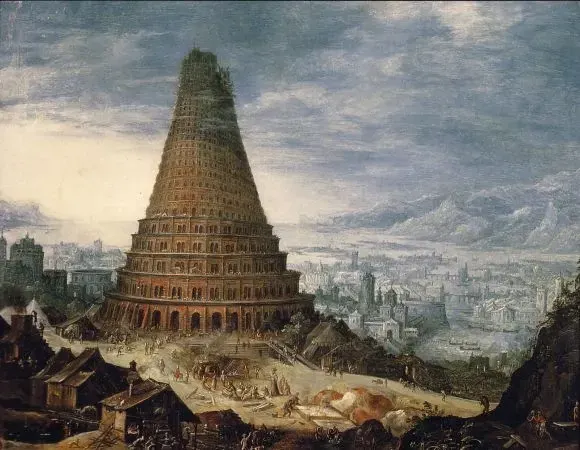
Applied Case: The Tower of Babel argued that plurality is neither one sovereign language nor a hallway of sealed rooms. A civilization needs shared protocols through which different instruments can answer one another without collapsing into one central voice.
Artificial intelligence needs the same architecture.
One closed model serving everyone becomes the tower.
A thousand incompatible models with no shared evidence path become the locked hallway.
The commons is the city between them.
Open weights and closed models are both legitimate field instruments.
Each has a proper function.
Each has a sovereignty failure.
The ethical task is to prevent either failure from becoming the constitution of artificial intelligence.
So:
Open models by default below demonstrated dangerous capability.
Test sufficiently capable systems under realistic scaffolds, regardless of ownership, nationality, or release plan.
Measure what weight access changes, rather than treating model size as destiny.
Stage frontier release through public evidence, independent evaluation, bounded research access, and useful derivatives.
Give defenders preparation time where the field shows a serious offense-defense asymmetry.
Place closed frontier systems under independent correction, public evidence requirements, portability obligations, review dates, and exit conditions.
Build public compute and evaluation infrastructure so formal openness becomes reachable capability.
Audit provenance, distillation, espionage, export, and procurement through instruments designed for those questions.
Preserve the trace of every release decision.
No blanket ban on open weights solves the field.
No patriotic release race solves it either.
China is not the constitution.
Microsoft does not receive the commons because Microsoft signed a letter.
Anthropic does not receive permanent custody because Anthropic identified a real danger.
Moonshot AI does not receive the word open in every available sense because the weights can be downloaded.
Modal Path Ethics asks what the transition makes reachable.
The answer is the Release Gradient: