Modal Path Ethics has been informed that physics may have some concerns.
This is not unusual. Physics appears to have concerns about quite literally everything.
Modal Path Ethics, having spent most of its young, bold life talking about futures, now finds itself standing in the hall, holding a folder labeled REACHABLE CONTINUATION, while relativity, quantum mechanics, cosmology, and time travel have all requested a private meeting.
This could be a problem for Modal Path Ethics.
If this framework depended on a simple picture of time, the theory would now be in danger. If it required one universal Now, one clean cosmic clock, one metaphysically privileged future waiting to arrive in an orderly queue, then physics could walk in, place several equations on the table, and quietly ask security to escort us out.
Fortunately, Modal Path Ethics was not doing that. Modal Path Ethics saw this coming.
Modal Path Ethics speaks constantly of futures, but the future in Modal Path Ethics is not a date. It is not a glowing calendar square somewhere downstream of the present. It is not the next scene in a cosmic screenplay. It is not “what happens later” in the sense where the universe is a big hallway and tomorrow is simply standing a few doors down.
A future, in Modal Path Ethics, is a reachable continuation from a field state.
That friendly sentence is doing more work than it may first appear to be doing. It is the difference between a theory that collapses the instant physics complicates time and a theory that survives contact with relativity, block-universe metaphysics, quantum gravity, time travel fiction, closed causal loops, and whatever Popular Mechanics is currently whispering into the public imagination under a headline that sounds like it was generated by a telescope having a panic attack.
The future is not a clock.
The future is a structure of continuation.
Time, apparently, continues to be a disaster.
This is rude of time, but not at all surprising.
In ordinary life, time seems pretty basic. We wake up. We regret waking up. We put something in the microwave for one minute and experience seventeen minutes of deep physical and spiritual development. We miss deadlines. We make deadlines. Time appears to be the background container in which all the things happen.
Physics has spent the last century becoming less and less cooperative with this general impression.
General relativity does not treat time as an unmoving cosmic stage. Time is woven into spacetime geometry. Gravity is not a mysterious hand pulling objects downward through a universal clockwork chamber. Matter and energy curve spacetime, and bodies move through that geometry. Clocks themselves are affected by motion and gravity. Time is not sitting in the back office, immune from the drama. Time is a big part of the drama.
Quantum mechanics, at least in many standard formulations, has often treated time differently: as a parameter against which quantum states evolve. This produces a deep mismatch. General relativity makes time dynamical. Quantum theory often treats time as the background variable. Try to put those together at the scale of black holes or the early universe and the furniture begins levitating, in a bad way.
This is part of what physicists and philosophers call the Problem of Time.
The phrase sounds like a title card from a lost episode of the Twilight Zone, but it names a real foundational difficulty. At the deepest level, the universe may not contain time in the way ordinary experience assumes. Some approaches to quantum gravity generate equations in which time, as normally understood, just disappears.
Some approaches try to recover time as emergent. Some try to make time relational. Some suggest that what we call time may be a feature of certain regimes rather than a primitive ingredient of reality.
This is the part where a weaker moral theory begins sweating profusely.
Modal Path Ethics does not sweat. Modal Path Ethics takes out a little notebook.
Because the thing Modal Path Ethics cares about was never “absolute clock-time.” It was always reachability, closure, and continuation.
The theory does not need time to be simple. It only needs fields to have structure.
The first objection arrives wearing a very respectable jacket.
“Excuse me,” says relativity. “You keep talking about the future. Which future?”
This is a very fair question.
Special relativity broke the old idea of a universal present. Events that one observer treats as simultaneous may not be simultaneous for another observer moving differently. There is no single cosmic Now slicing across the whole universe like a deli counter making spacetime sandwiches.
This seems like a problem for any theory that speaks of “the future.”
If there is no universal present, then perhaps there is no universal future. If there is no universal future, perhaps Modal Path Ethics is smuggling Newtonian metaphysics into moral philosophy, which would be extremely embarrassing.
Modal Path Ethics would have to stand before the tribunal and admit that it built an ethics of futures out of an obsolete clock.
Modal Path Ethics thanks the tribunal for its wisdom and concern, and enters the following clarification:
That region may include agents, institutions, bodies, ecosystems, records, weapons, laws, dependencies, material capacities, threats, repair paths, histories, and constraints. It may be a hospital ward, a family, a prison, a school, a battlefield, a river basin, a laboratory, a courtroom, a game board, a supply chain, a trauma field, a collapsing city, or one person sitting in a car outside work realizing that today may become the rest of their life if no active intervention enters.
Modal Path Ethics does not ask, “What is happening everywhere in the universe, right now?”
That question is both physically suspect and morally useless. No one has ever made a better decision in a damaged institutional field because they first achieved simultaneity across Andromeda.
Modal Path Ethics asks a different question:
That survives relativity because relativity does not erase causal structure. It only disciplines it. Events may not have a universal ordering when they are spacelike separated, but causal relationships remain constrained. Signals do not get to ignore light cones because someone in procurement wants quarterly growth.
Therefore, Modal Path Ethics does not need a cosmic Now. It only needs field-relative ordering. It needs to know whether intervention can still arrive before closure. It needs to know whether a child can still be protected, whether a witness can still speak, whether an ecosystem can still recover, whether an institution can still be redirected, whether a design can still be changed before it hardens into infrastructure.
These are not questions about a universal present. They are questions about causal accessibility.
Relativity does not kill Modal Path Ethics. It just makes Modal Path Ethics even cleaner.
It prevents lazy global language. It forces the theory to stop speaking as if the whole universe were one kitchen timer. It makes us say what we should have been saying anyway: moral action is situated, fields are local, and futures are reachable continuations rather than metaphysical weather reports.
The future is not “what happens after now.”
The future is what remains reachable from a field.
This gives us a useful term:
Field-time.
Field-time is what tells us that a repair window is closing even when the wall clock is still calmly pretending everything is normal.
A patient with a treatable condition has field-time. A species approaching extinction has field-time. A child inside an abusive home has field-time. A bridge with a known structural defect has field-time. A legal appeal has field-time. A whistleblower has field-time. A political order sliding toward authoritarian capture has field-time. A game position has field-time. An addiction spiral has field-time. A forest after a fire has field-time.
Field-time is not always visible from outside. This is why damaged fields are so often misread. Someone standing outside the field says, “There is still time.” The field says, with the patience of a person trying not to scream in a meeting, “There is not time for the thing you are imagining.”
This is one of the central insights of Modal Path Ethics:
The visible injury may be obvious. The deeper harm lies in the collapse of reachable continuation. A path that could once have been entered becomes ornamental. It remains imaginable but no longer available. The sentence “we should have done something” keeps working grammatically after the branch point has closed, which is one of language’s many crimes.
Field-time names the difference.
Between them lies the moral structure that Modal Path Ethics studies.
The next objection arrives as metaphysics. It says:
This is the block-universe concern. Relativity has often been taken to support eternalist interpretations of time, where past, present, and future events are all equally real within the four-dimensional spacetime structure. The present may not be metaphysically special. The future may not be “open” in the ordinary intuitive sense. The universe may be less like an unfolding story and more like an already complete spacetime manifold, which is certainly very elegant and also socially wildly difficult.
At this point someone usually says, “If the future already exists, then nothing matters.”
Modal Path Ethics has reviewed this objection and found it extremely melodramatic.
Even if eternalism is true, agents still occupy decision structures. Information is still local. Capacities are still constrained. Institutions still preserve or destroy possibilities. Bodies still suffer. Repairs still arrive or fail to arrive. Choices still express and participate in the field structure through which continuations become accessible or inaccessible to situated beings.
A block universe, if true, would not make all actions morally equivalent. It would not cause prisons, hospitals, famines, genocides, extinction events, abuse systems, or repair institutions to become interpretively flat. It would not make a locked door identical to an open one from the perspective of the person trapped behind it.
Modal Path Ethics does not require metaphysical presentism. It does not require the future to be unreal until chosen.
It requires modal comparison within a field.
That is different. A repair path can be structurally available even if some metaphysical theory says the whole spacetime history is tenselessly real. A harmful act can close reachable continuation even if, from a God’s-eye view nobody has, the entire four-dimensional structure exists. Field analysis concerns the local organization of access, capacity, injury, and continuation.
Here, Modal Path Ethics has an advantage over moral theories that depend too heavily on folk images of choice.
The theory does not say:
That is inspirational-calendar metaphysics. It sells well near checkout lanes and explains very little.
Modal Path Ethics says:
That claim works under open-future metaphysics.
It works under many deterministic pictures.
It works under eternalism.
It works under practical agnosticism about the ontology of time.
The metaphysics may change the story we tell about becoming. It does not erase the structural distinction between preserving repair capacity and burning it down while calling the flames efficient.
This is where science fiction has both helped and damaged public reasoning.
Science fiction is full of futures. Some are alternate timelines. Some are branching universes. Some are closed loops. Some involve a heroic pilot, a wormhole, a dying planet, and a bookshelf behaving in a way that would get a home inspection failed in several jurisdictions.

Modal Path Ethics uses time-travel and alternate-history scenarios because they are useful stress tests. They dramatize branch points. They make path dependence visible. They show how a small action can preserve or destroy vast future structure. They let us inspect the difference between a fantasy repair and a reachable repair.

But Modal Path Ethics does not depend on cinematic time travel being physically real.
This point needs to be made plainly because otherwise someone will wander in and say, “Your theory discusses alternate timelines; therefore it assumes Marvel-esque physics.”
No.
Modal Path Ethics discusses alternate paths because counterfactual comparison is unavoidable in moral analysis.
If a doctor gives the wrong medication, we compare the actual path with the available path in which the correct medication was given. If a government ignores warnings before a preventable disaster, we compare the actual path with reachable mitigation paths. If a parent fails to protect a child, if an institution buries evidence, if a designer releases a dangerous system, if a society keeps choosing the same extractive shortcut until all exits narrow, moral judgment requires path comparison.
This does not require physically existing branch universes. It only requires intelligible alternatives under field constraints.
A modal future is not necessarily a parallel world. It is a reachable continuation that could be preserved, entered, blocked, degraded, or made impossible from the field state under analysis.
That is why time-travel fiction is valuable even when its physics is nonsense. It puts the structure under very bright lights. The hero arrives too late. The branch point has already closed. The attempt to repair creates the damage. The information needed for rescue exists but cannot reach the person who needs it. The agent changes one event and discovers that the field was not a single lever but a coupled system.
These stories are useful because they are cartoons of field structure. Some such cartoons are better than others.
Physics does allow, at least in some general-relativistic models, discussion of closed timelike curves. A closed timelike curve is a path through spacetime that returns to an earlier event on its own timeline. This is the formal neighborhood in which “time machines” become thinkable.
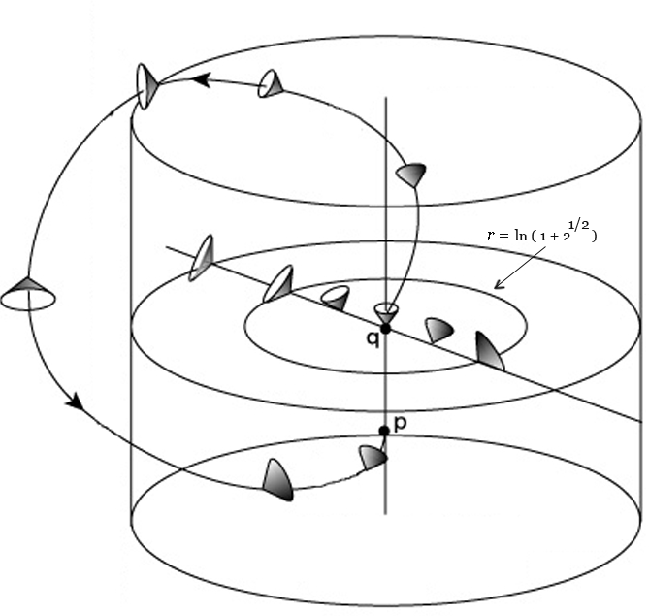
The public imagination hears this and immediately reaches for the grandfather paradox.
Physics, being physics, instead asks whether spacetime can contain such curves, whether they require exotic conditions, whether quantum effects prevent them, whether chronology protection applies, whether the relevant solutions are physically realistic, and whether causal consistency can be maintained.
Modal Path Ethics watches this discussion from the corner of its eye with interest, because closed timelike curves do not actually create unlimited freedom.
They create consistency constraints.
This is the opposite of how time travel is usually imagined.
In popular fantasy, time travel is a magical edit button. The agent jumps backward, changes the past, and the universe has to recalculate itself around the agent’s emotional needs. This is very flattering to protagonists and terrible metaphysics.
A closed causal loop is harsher. If the loop is self-consistent, the agent’s action is already part of the structure. If the loop allows multiple consistent histories, the path-space is still constrained by consistency. Either way, the agent has not escaped structure. The agent has entered a field where structure is weirder and, if anything, much more severe.
Modal Path Ethics does not panic here. It says: excellent, thank you for the hostile test environment.
A closed loop is still a field. That field has constraints. It has accessible and inaccessible continuations. It has interventions that preserve consistency and interventions that cannot be coherently realized. It may have no “before” in the ordinary sense, but it still has relations of dependence, reachability, information flow, and closure.
This is exactly where Modal Path Ethics becomes more useful than ordinary moral slogans.
Modal Path Ethics asks better questions:
This is not a problem for Modal Path Ethics. This is what Modal Path Ethics does every day.
Now we arrive at the deeper concern.
Quantum gravity goes further and asks whether time, at the fundamental level, even exists in anything like the way we experience it.
A recent Popular Mechanics article describes a proposal in which time is tied to geometry: a “geometric clock” that makes time meaningful in some curvature regimes while weakening in others. The details are technical and early. The point for Modal Path Ethics is not that this model is true. The point is that serious physics keeps pushing us away from the idea of time as a universal, obvious, background substance.
Fine. Modal Path Ethics can live there no problem.
The ethical world does not need fundamental time to be simple. The ethical world needs emergent ordering at the level where agents act, harms occur, institutions preserve or destroy capacity, and repair can still enter.
This is not special pleading. Many sciences work this way.
Fields have levels. Structures emerge. Constraints become real at the level where they organize action.
Modal Path Ethics operates at the level of agency, harm, repair, and continuation. If deeper physics eventually says time is emergent, relational, perspectival, or regime-dependent, then Modal Path Ethics updates its foundation in exactly the direction it already needed to go.
The theory becomes less Newtonian and becomes more field-native.
A damaged field does not ask whether time is fundamental. It asks whether the ambulance can arrive before the patient dies. It asks whether testimony can be preserved before the archive is destroyed. It asks whether a child can still learn trust before the world teaches them that trust is a trap. It asks whether a river can still recover before its living systems cross the threshold into collapse. It asks whether a civilization can redirect before its infrastructure makes better futures decorative.
These are questions of ordered continuation. They do not require the universe to be a clock.
They require that, in the field under analysis, some interventions can still make a difference and others can no longer arrive.
This gives us a stronger definition of harm.
Harm is often described as the production of bad states. Modal Path Ethics has always pushed deeper: harm closes futures. Now, we can say this with more precision.
It does not need to be located against a universal Now. It does not need the future to be metaphysically unreal before the action. It does not need every possible path to exist as a parallel universe. It requires only that some continuations were reachable under the field’s constraints and that an act, omission, structure, or event made them less reachable, less livable, less recoverable, or impossible.
This definition handles ordinary cases.
But it also handles strange cases.
Modal Path Ethics is not asking physics for a permission slip to continue. It is asking a more durable question than clock-time allows.
Good, in Modal Path Ethics, preserves or restores continuable structure.
Better is the least-closing path when the field is already damaged.
Those claims become sharper under field-time.
Repair is not simply a good thing that happens later. Repair must enter while the relevant continuation remains reachable. This is why timing is morally structural rather than administratively inconvenient.
This is why “we will fix it later” is one of the most dangerous sentences in moral life.
Sometimes later is real. Sometimes later is a euphemism for never inside a suit.
Sometimes later is a place that exists only for the people not trapped in the closing field.
Field-time exposes this fraud.
Repair has a deadline because continuation has structure. The deadline may not be printed anywhere. It may not match the legal deadline, the funding cycle, the election cycle, the quarterly report, the academic calendar, or the emotional readiness of the person responsible. The field does not care. It has its own thresholds.
Modal Path Ethics is deeply paranoid that it will be accused, by people who have not met it, of being abstract.
Modal Path Ethics is obsessed with whether repair can still physically, socially, institutionally, informationally, and psychologically arrive.
That is the floor, not an abstraction.
Modal Path Ethics talks about time travel often enough that someone may eventually accuse it of treating fictional temporal mechanics as philosophical evidence.
This article should remove that target in advance of Entropy Debt Week.
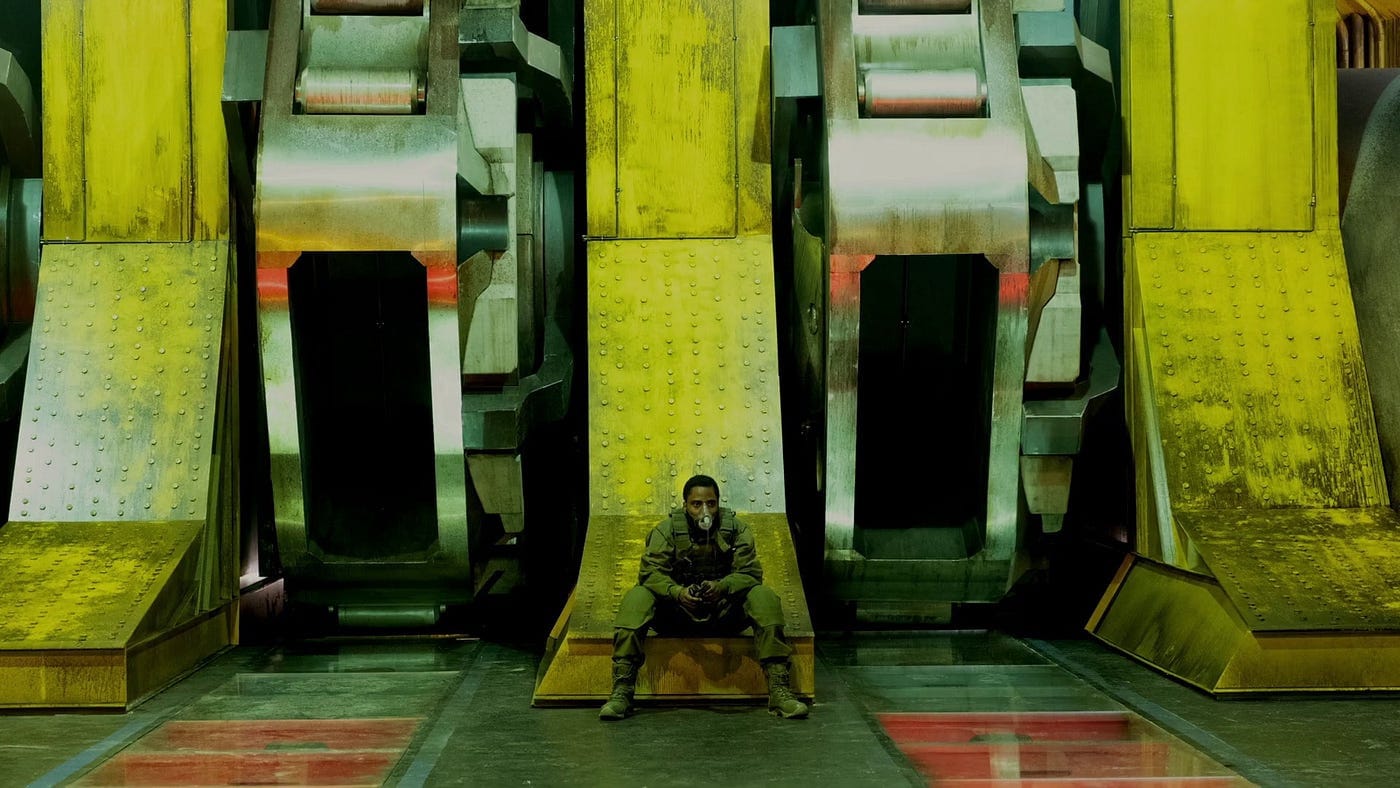
Time travel scenarios are not evidence that time travel exists. These are model environments for path analysis. They let us test moral intuitions under extreme branch conditions.
The reason the “go back and kill Hitler” scenario is philosophically durable is not that it offers a serious policy proposal. It is durable because it exposes the childishness of single-node repair fantasies. It asks whether catastrophe belongs to one person, one moment, one missed intervention, or a field of conditions. It asks whether later moral imagination is overfitting the past around a theatrical branch point because the real field was too large and too humiliating to inspect.
The same applies to every serious time-travel story.
These are Modal Path Ethics problems. No DeLorean required, or even desired if it still has that loosely-installed nuclear material in it.
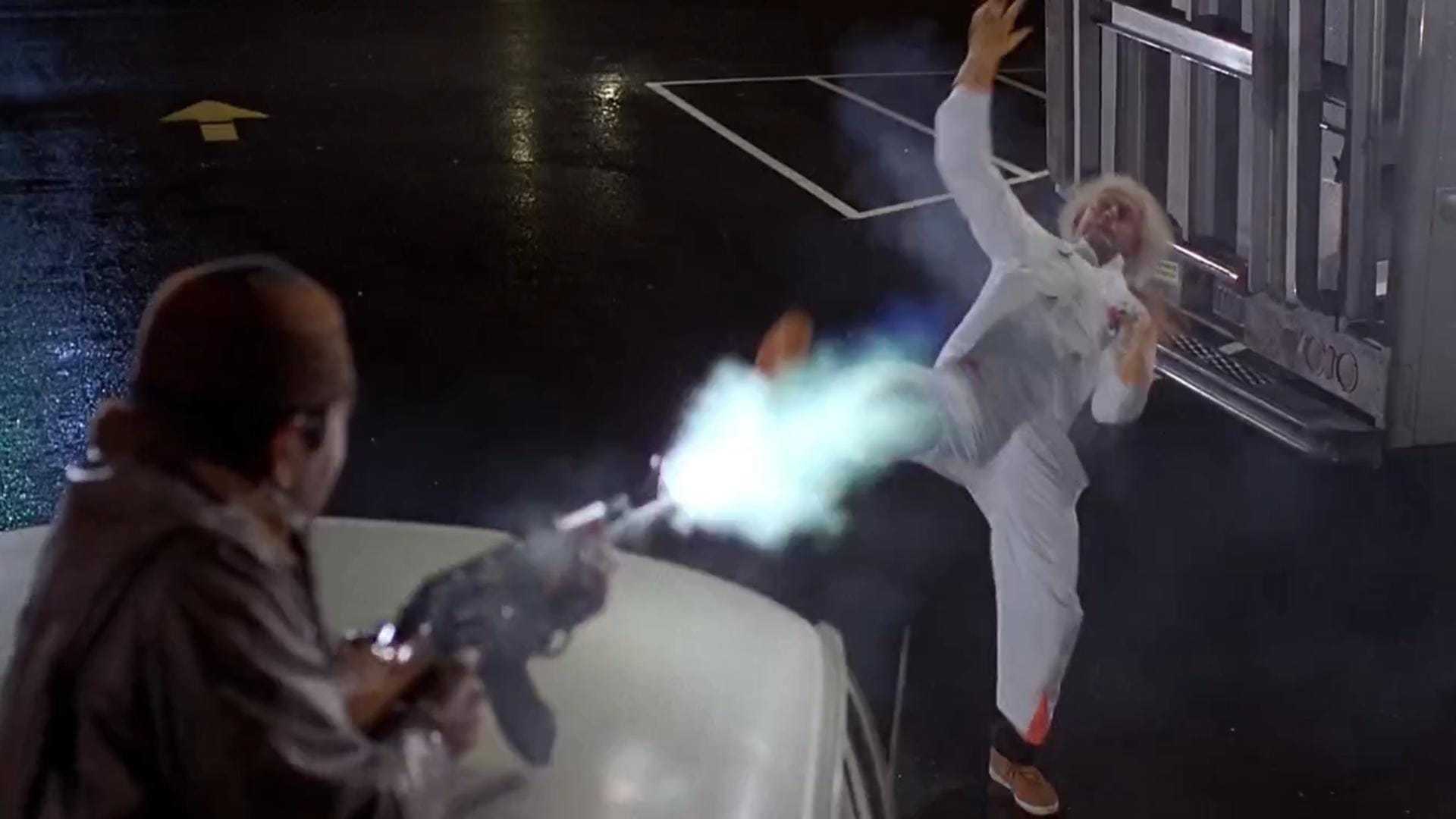
The theory can therefore use time travel fiction while remaining physically sober. It can say: this is not a cosmology, just an ethical wind tunnel. We are testing concepts under exaggerated causal stress.
Modal Path Ethics needs speculative tools, and it needs them to be multi-modal. The theory studies paths. Some paths are real. Some are historical alternatives. Some are institutional repairs. Some are technological futures. Some are fictional models. Some are impossible in literal physics but revealing as counterfactual structures.
Modal Path Ethics should do neither, forever.
So let us assemble the defense structure plainly.
The real object is continuability. That is the shield.
The future in Modal Path Ethics is shorthand for reachable continuation from a field state. Once that is clear, physics stops threatening the theory and starts refining it.
Modal Path Ethics should not imagine moral life that way either.
Modal Path Ethics should analyze situated fields rather than pretending to occupy nowhere.
Modal Path Ethics has been trying to get everyone to notice structure the entire time.
Modal Path Ethics concerns the emergent domains where agents, harms, repairs, and continuations exist.
Modal Path Ethics loves nothing more than explaining why your preferred intervention is not actually available under the constraints you ignored.
The result is a clarification, not retreat.
Modal Path Ethics is not clock ethics. It is path ethics.
There is a final linguistic problem:
This one is dangerous because people hear “future” and imagine later time. Tomorrow. Next year. The sequel. The promised technological age in which everyone has clean energy, universal healthcare, and a kitchen appliance that does not require firmware updates.

But in Modal Path Ethics, “future” means something more precise.
Some futures are near. Some are deep. Some are personal. Some are institutional. Some are ecological. Some are civilizational. Some are so fragile that one act can close them. Some are so robust that many harms fail to destroy them. Some are physically possible but socially unreachable. Some are morally necessary but institutionally blocked. Some exist only if repair arrives before the field crosses a threshold.
The word “future” remains useful because human beings need temporal language to think about consequence. But the concept underneath must be cleaned.
When Modal Path Ethics says harm closes futures, it means harm contracts the live structure of continuation.
When Modal Path Ethics says good preserves futures, it means good protects the conditions under which continuation remains reachable.
When Modal Path Ethics says Better is the least-closing path, it means the right action in a damaged field is not the prettiest imagined outcome. It is the path that preserves or restores the greatest morally relevant continuability under actual constraint.
This survives physics. In fact, this becomes more necessary under physics.
Because if time is not simple, then ethical theories built on simple time are extremely fragile.
They speak as if every moral problem occurs in a clean sequence: first choice, then consequence, then evaluation, then repair. Real fields are uglier. Causes loop through institutions. Harms arrive late. Warnings fail to propagate. Repair windows close before anyone with authority admits they were open. People inherit damaged fields from choices they never made. A future can be lost before it becomes visible to those who will later mourn it.
This is why the future cannot be a clock. A clock can tell you that time passed.
It cannot tell you what became unreachable while everyone was watching it.
The Problem of Time sounds remote. It belongs, apparently, to quantum gravity, cosmology, black holes, early-universe models, and people who can use the Wheeler-DeWitt equation in a sentence without making nearby civilians incredibly uncomfortable.
But the ethical lesson is close.
Human beings constantly mistake clock-time for field-time. We think there is still time because the calendar contains many squares. We think the path remains open because the words describing it remain pronounceable. We think repair is available because we can imagine it. We think the future is safe because it has not happened yet.
Modal Path Ethics exists to say:
The path may already be closing.
The repair may already be late.
The field may already have lost the continuation you are promising to protect.
The future is not guaranteed by the existence of tomorrow. Tomorrow can arrive after the future has been destroyed.
This is the final reason Modal Path Ethics survives the physics of time. It was never defending the sentimental future. It was never asking us to believe in a universal cosmic Now. It was never committed to the picture of reality as a clean timeline on which moral agents make theatrical choices while the universe politely waits.
Modal Path Ethics asks what action does to continuation.
That question remains wherever beings can be harmed, wherever repair can arrive, wherever fields can close, wherever a path can still be preserved, and wherever “after” still names something that can receive what we do now.
What must be preserved so that continuation remains possible?

That is the ethical question hiding underneath the clock. And if physics has made the clock less trustworthy, then Modal Path Ethics will simply stop leaning on it.
It has paths to inspect anyway.