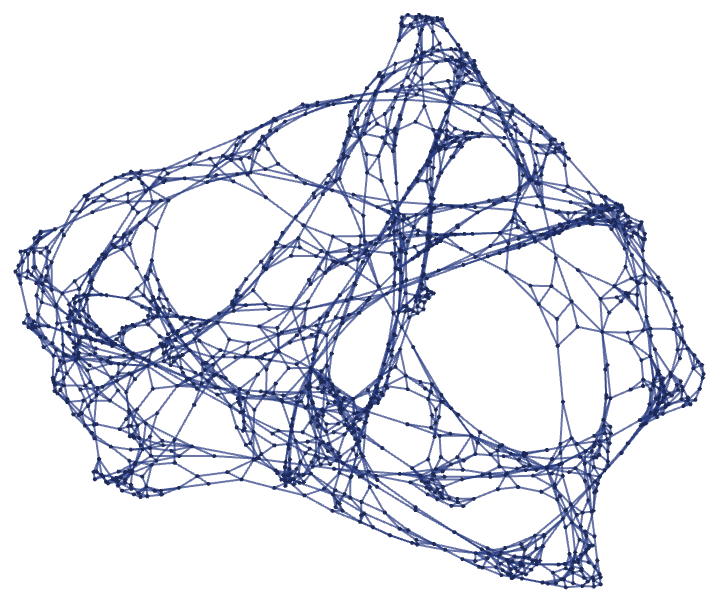
Stephen Wolfram is very dangerous for Modal Path Ethics because the resemblance is real, to the extent he was included in Appendix A.
His work gives one of the most ambitious contemporary accounts of a generated universe: rules transforming structures, histories producing present configuration, causal dependencies forming through sequences of updates, and complexity resisting shortcut even when the underlying rule is known. That is close enough to this framework’s language of extance, reachability, lawful succession, and path-dependence that the connection should be made directly.
It is also close enough that the distance has to be marked out.
Modal Path Ethics depends on a much thinner commitment than Wolfram’s physics.
If reality has just that much structure, Modal Path Ethics has what it needs. Hypergraphs may help us picture the field. Computational rules may help describe the field. The ruliad may help imagine the largest possible horizon of computational generation.
The moral claim begins much closer to the ground:
Wolfram gives powerful language for the first half of that claim.
He helps describe how a reality could be generated through rule-governed transformation. Modal Path Ethics enters where description becomes morally insufficient, because a generated field can also be damaged.
The question is therefore not whether Wolfram secretly contains Modal Path Ethics, or whether it should be folded into computational physics.
The real question is what his picture clarifies about the structure of extance, and what Modal Path Ethics has to add once generated reality becomes a moral field.
The strongest convergence is generation.
A Wolfram system is historical all the way down. The current state is the result of prior rule applications. The next state depends on what the present structure permits. The future does not arrive as an abstract menu hovering above the system. It arrives through the actual configuration already produced.
That is why Wolfram belongs nearer to Modal Path Ethics than to ordinary possible-worlds talk.
Possible-worlds frameworks spread attention across alternate descriptions of how things might have been.
Wolfram’s computational picture keeps attention on production:
What the present has become, which rules can act upon it, and which successors can follow from the structure now in place.
Modal Path Ethics works in the same direction at the ethical level. It asks what can still grow from here, after this history, under these constraints.
Extance is not actuality. A dead inventory of what happens to exist would not be enough. Extance names active, realized, causally operative structure: the field that has already been made and still bears further possible continuation.
A harmed field is therefore not just a field with worse properties. It is a field whose capacity to continue has been altered. Some futures that once belonged to the live path have fallen out of reach. Some remain formally imaginable while resistance rises around them. Some can still be recovered, but only through repair labor that earlier choices have made much harder.
Wolfram’s picture makes this kind of structure easier to see.
A universe generated through rules is a universe in which the present carries its path inside itself. The past has not simply happened behind it, it is built into the configuration from which all future transformations must proceed.
That is already close to the moral field.
The next convergence is locality.
Wolfram’s work is famous for showing how simple local rules can generate surprising global complexity. The apparent grandeur of the world does not require a grand command at every point. Iteration can do tremendous work. Local transformations can accumulate. A rule that looks almost trivial in isolation can generate structure no observer would have predicted from the first glance alone.
Modal Path Ethics needs this lesson because moral damage often has exactly that shape.
Institutions usually do not announce their final catastrophe in the first rule. They begin with small permissions, small transfers, small exclusions, small incentives, small acts of denial.
The rule may look local. The generated field may become unlivable.
This is one reason Modal Path Ethics distrusts moral theater.
Human attention is drawn to dramatic intention, spectacular cruelty, and scenes with obvious villains. Generated harm often arrives through ordinary operations. The field contracts because a system keeps updating itself according to rules that protect local coherence while exporting damage into weaker, later, or less visible loci.
No one local move has to contain the whole evil in miniature.
The sequence does all the work.

Wolfram helps here by making iteration philosophically central. He gives permission to think seriously about worlds where the large pattern is generated from below, not imposed from above.
Modal Path Ethics gives that insight its moral edge: a locally intelligible transition can still belong to a globally harmful path.
The important question is what the repetition makes ordinary.
If the repeated operation lowers resistance to care, preserves repairability, and keeps better continuations reachable, then the generated field improves. If it transfers burden, punishes truth, consumes trust, and narrows future-space, then the field is being trained toward collapse.
The generated structure is the moral evidence.
Wolfram’s causal graphs offer another important element.
Moral discourse often confuses proximity with cause. Something happens near a harm, before a harm, beside a harm, or in the same social drama as a harm, and the human story-making apparatus begins assigning guilt, innocence, and symbolic relevance.
Some of those assignments may be right. Many are only narratively satisfying.
Modal Path Ethics needs a stronger discipline. Burden transfer, institutional failure, distortion fields, and repair all depend on actual causal structure.
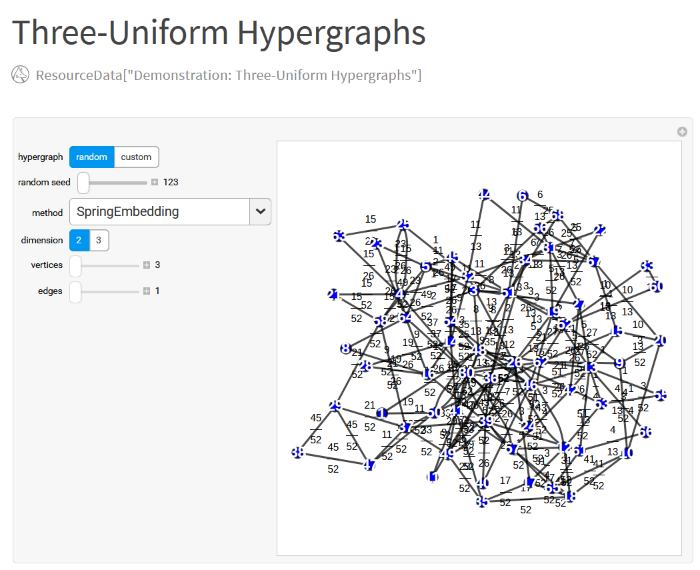
Causal graph thinking separates dependency from atmosphere. It asks which update-events actually had to happen for later events to become available. It tracks the history of enablement. That is very close to what Modal Path Ethics requires when it evaluates responsibility without collapsing responsibility into blame.
Modal Path Ethics cares about the transition structure beneath the social story.
This is especially important in damaged fields, because damaged fields generate false legibility. They often metabolize harm into roles: offender, victim, authority, deviant, threat, innocent bystander, unfortunate case, necessary cost.
Those roles may all track something real, but they rarely ever exhaust the causal structure. The field has deeper dependencies than the public drama can hold.
Wolfram’s causal machinery helps us name that seriousness. It points toward a world where causation is not a mood or a narrative convenience.
Causation is a traceable structure of dependence among events.
Modal Path Ethics then adds the moral question:
Which dependencies closed the future?
Computational irreducibility may be Wolfram’s most important contribution to this neighborhood. The basic thought is easy to state and difficult to absorb.
Some systems cannot be reliably shortcut.
Knowing the rule may still leave the future unavailable until the system has actually run through. The later state is generated through the process itself, and no elegant compression ever gives the observer full advance possession of it.
Modal Path Ethics should take that personally.
A moral field is not a puzzle box viewed from outside.
We always act inside fields whose transition structure is partially opaque, historically burdened, and often too complex for clean prediction. Institutions act with incomplete maps. Persons act with fear, loyalty, ignorance, exhaustion, and social pressure. Civilizations act through instruments that were built for earlier worlds and then pretend those instruments are neutral.
A real decision procedure has to live inside that opacity.
This is why the framework’s questions are orienting questions rather than an oracle algorithm.
These questions simply discipline contact with the field. They do not abolish the field’s complexity. Computational irreducibility gives philosophical weight to that humility.
It says that lawful structure and easy prediction are different things. A generated field can be real, ordered, and rule-bound while still resisting any shortcut that would let an observer leap ahead of the path without loss.
This shames every moral system that sells premature mastery.
A theory that always reaches certainty too quickly has usually thrown away a large part of the field. It has reduced severity to quantity, burden to preference, repair to punishment, consent to procedure, care to sentiment, or order to good. The compression produces local confidence.
The field always pays the cost.
Modal Path Ethics refuses that style of certainty. It wants contact before verdict, path before summary, and repairability before symbolic closure.
Wolfram’s irreducibility sharpens the reason. In the kinds of systems where moral life actually occurs, the path contains information that cannot be safely replaced by a slogan.
The divergence begins at level.

This is why the affinity with Wolfram can be strong without becoming in any way foundational.
That level difference should prevent both cheap dismissal and over-identification.
The philosophical connection is structural, illuminating, and limited.
Computational representation creates another bad temptation.
Once a thinker places many kinds of phenomena inside one formal medium, the mind starts looking for one scale to use. A child, a forest, a language, a hospital, a city, a river, and a civilization can all be described as structures undergoing transformation.
A sufficiently ambitious computational model may represent each as state, process, dependency, update, resilience, decay, and transition. That shared representability is useful. It is also morally very dangerous.
A common formal medium supplies a way to compare structures. It does not supply a common moral currency.
The fact that several losses can be represented within one computational universe does not mean they can be exchanged at any clean rate.
Formal unity is not Scalar Path Ethics.
This is where the commensurability work becomes critical.
Modal Path Ethics compares moral paths all the time. It has no choice.
Better is a comparative category. Triage, rescue, institutional design, ecological repair, punishment, AI governance, war, medicine, and civilizational strategy all require comparison among damaged options.
But comparison is not arithmetic.
are structural dimensions, not loose coins in a common purse.
A computational picture can help map those dimensions. It can show dependencies, bottlenecks, cascades, lockouts, fragile nodes, and recoverable paths. It can clarify the field. It can expose relationships too complex for ordinary moral language.
Then, the ethical work begins.
Moral remainder is one sign that the field has not collapsed into a single scale.
A better path may remain harmful. A necessary restraint may still burden a locus. A rescue may preserve one future while honestly losing another. A civilization may choose the least-closing path available and still owe the world an account of the closure that remained.
Computation can help represent the wound. It can not price the wound into innocence.
Simulation theory enters from another direction.
If reality is generated computationally, someone will try to use that fact to loosen moral seriousness. They will say the field is only code, only information, only a rendered process, only a local sampling of a deeper structure. They will move from substrate uncertainty to ethical unreality.
Modal Path Ethics has already closed that route.

The substrate question may matter enormously for physics, engineering, theology, and metaphysics. It may change how repair works. It may change what kinds of continuance are possible. It may change how copying, branching, memory, substrate-dependence, and death should be understood.
It does not license nihilism.
If extance is happening computationally, then computation is where moral contact occurs. The field has not disappeared. It has become stranger and more technically demanding.
Wolfram’s work makes that thought more serious because it offers a computational picture with real depth. The answer to that depth cannot be retreat into folk metaphysics. It has to be better contact with generated reality.
The ruliad is the largest pressure point.
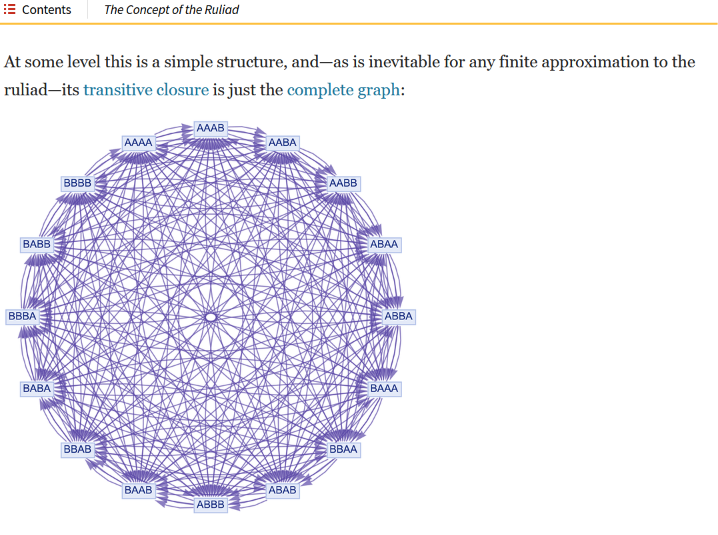
Wolfram’s ruliad is the vast image of all possible computation: all rules, all ways of applying them, all resulting structures, all entangled into the ultimate computational object. This thing is an awesome concept.
It also sits near one of Modal Path Ethics’ most important distinctions:
Possibility is wider than reachability.
The framework's moral concern lies in the sharper region.
The question is what remains reachable from within the actual field. The existence of a wider computational space may tell us something profound about possibility as such.
It does not automatically repair a closure inside extance.
The point here is to set a guardrail, not an accusation. Wolfram does not have to personally turn the ruliad into moral consolation for Modal Path Ethics to identify and reject that consolation in advance.
Abundant possibility has always attracted fantasies of escape.
Modal Path Ethics has to keep returning to the wound in the field at hand.
That is why extance matters morally. The morally relevant boundary is not the outer edge of all possible computation. It is the living edge where this realized structure can still continue, repair, distort, or collapse.
Wolfram clarifies five things MPE needs to say cleanly.
That is enough to make Wolfram one of the serious philosophical neighbors. It is also enough to show why Modal Path Ethics has its own work to do.
Modal Path Ethics adds harm.
A generated universe can be described as a sequence of updates, but the moral significance of those updates begins when they affect continuance.
Those are not questions computational physics answers by itself.
They require the moral vocabulary of extance, reachability, resistance, burden transfer, distortion, care, and better. They require attention to embedded loci rather than only to formal structure, and a distinction between generation and good generation, between proliferation and preservation, between lawful succession and moral continuability.
The rule can run. The structure can update. The graph can branch. The causal dependencies can remain perfectly real.
The field can still be moving toward collapse.
Wolfram gives Modal Path Ethics a powerful neighboring account of generated reality.
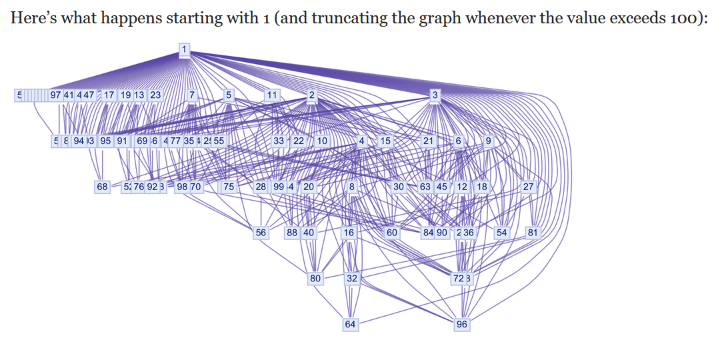
The resemblance is strongest around path-dependence, local transformation, causal dependency, branching history, and computational irreducibility. Each of these helps clarify why Modal Path Ethics treats extance as a moving field rather than a static moral stage.
The divergence is equally important.
The correct relation is therefore neither discipleship nor dismissal.
Modal Path Ethics can accept computational generativity as a serious metaphysical neighbor while keeping its own foundation in the structure of reachable continuance. It can use hypergraphs, causal graphs, irreducibility, and the ruliad as orienting images without treating any of them as ethical masters.
A path-generated universe is exactly the kind of universe in which extance matters. What has happened constrains what can happen. Some continuations remain open. Others have been lost. Some remain possible in name while resistance makes them practically unreachable.
Ethics begins in that difference.